DISCLAIMER: GoldInvestors.news is not a registered investment, legal or tax advisor or broker/dealer. All investment/financial opinions expressed by GoldInvestors.news are from the personal research and experience of the owner of the site and are intended as educational material. Although best efforts are made to ensure that all information is accurate and up to date, occasionally unintended errors and misprints may occur.
President Donald Trump travels to Beijing for talks scheduled from March 31 to April 2, arriving at a moment when tariff battles have dominated the political and economic landscape.
The journey signals a renewed push to shape the terms of trade between the two largest economies, even as detractors warn of the risks to growth and investment.
Here's What They're Not Telling You About Your Retirement
Over the past year, Washington and Beijing have exchanged a volley of tariffs, counter tariffs, and demands on market access that have unsettled supply chains and clouded corporate planning.
Market watchers say the talks could influence everything from factory investment to currency dynamics, even as both sides defend their core interests.
Analysts expect minimal breakthroughs may be possible, with negotiators aiming for incremental steps rather than a sweeping deal that would calm markets overnight. Therefore, the visit is likely to set the tempo for months of careful bargaining rather than deliver a quick resolution.
Trump will likely emphasize a results oriented approach that pressures Beijing on intellectual property protections and forced technology transfers while offering avenues for strategic concessions on tariffs and procurement.
This Could Be the Most Important Video Gun Owners Watch All Year
The administration has long framed the dispute as a test of economic sovereignty and market discipline, and that framing will color the talks.
From the Chinese side, Beijing will seek to demonstrate responsible stewardship of its economy while resisting pressure to concede on structural reforms deemed essential to its long term growth.
It will argue that stability in supply chains and a stable currency market are critical to avoid destabilizing global trading relationships.
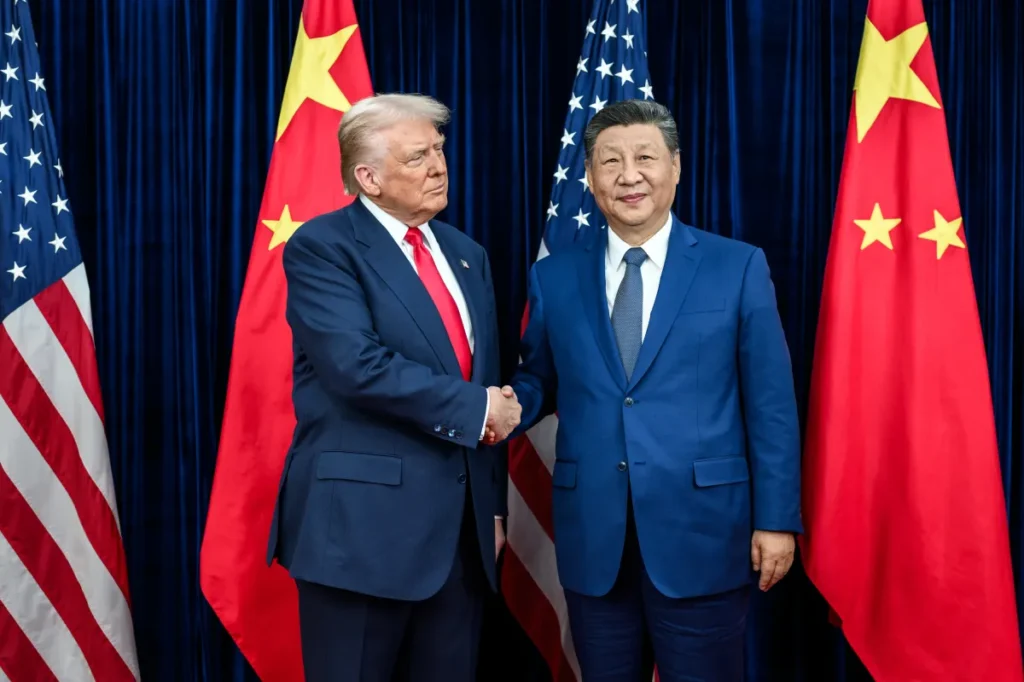
Markets will be watching the signals coming from both sides for hints of a durable arrangement or merely a tactical pause. Equities, currencies, and commodities markets have already priced in a range of outcomes, making the case for discipline in portfolio decisions.
Gold has moved in the past as people awaited clarity on trade policy, underscoring the role of precious metals as a hedge in uncertain times.
Given the political and economic risk, investors will likely diversify toward safety while also seeking selective exposure to growth themes.
Industry groups worry that a protracted tariff regime will raise costs for manufacturers and exporters, encouraging shifts in supply chains that could take years to solidify. The administration could use the Beijing talks to secure guarantees on market access for key sectors while avoiding a broad tariff rerun.
From a fiscal perspective, deficits and debt service costs remain in focus as the economy navigates slower growth and rising interest rates. In this context the talks carry implications for how policymakers balance short term stimulus with long term sustainability.
Political considerations in Washington and Beijing will shape concessions on enforcement mechanisms and verification procedures. Trust will be earned only through credible enforcement and a track record of compliance that extends beyond headlines.
Global partners in Europe and Asia will be watching the outcome closely to decide how to recalibrate trade policy and supply chain risk. A credible path forward could reduce volatility and encourage a broader uptick in investment appetite.
Ultimately the Beijing visit will be judged by whether the talks yield a roadmap that reduces friction without surrendering core principles of economic sovereignty.
For investors the outcome matters because it sets the stage for how aggressively portfolios should tilt toward domestic dollars, durable goods, and selective equities in the quarters ahead.
DISCLAIMER: GoldInvestors.news is not a registered investment, legal or tax advisor or broker/dealer. All investment/financial opinions expressed by GoldInvestors.news are from the personal research and experience of the owner of the site and are intended as educational material. Although best efforts are made to ensure that all information is accurate and up to date, occasionally unintended errors and misprints may occur.
Join the Discussion
COMMENTS POLICY: We have no tolerance for messages of violence, racism, vulgarity, obscenity or other such discourteous behavior. Thank you for contributing to a respectful and useful online dialogue.