DISCLAIMER: GoldInvestors.news is not a registered investment, legal or tax advisor or broker/dealer. All investment/financial opinions expressed by GoldInvestors.news are from the personal research and experience of the owner of the site and are intended as educational material. Although best efforts are made to ensure that all information is accurate and up to date, occasionally unintended errors and misprints may occur.
Bitcoin’s latest pullback has once again reminded investors that digital assets remain highly sensitive to shifts in sentiment and liquidity.
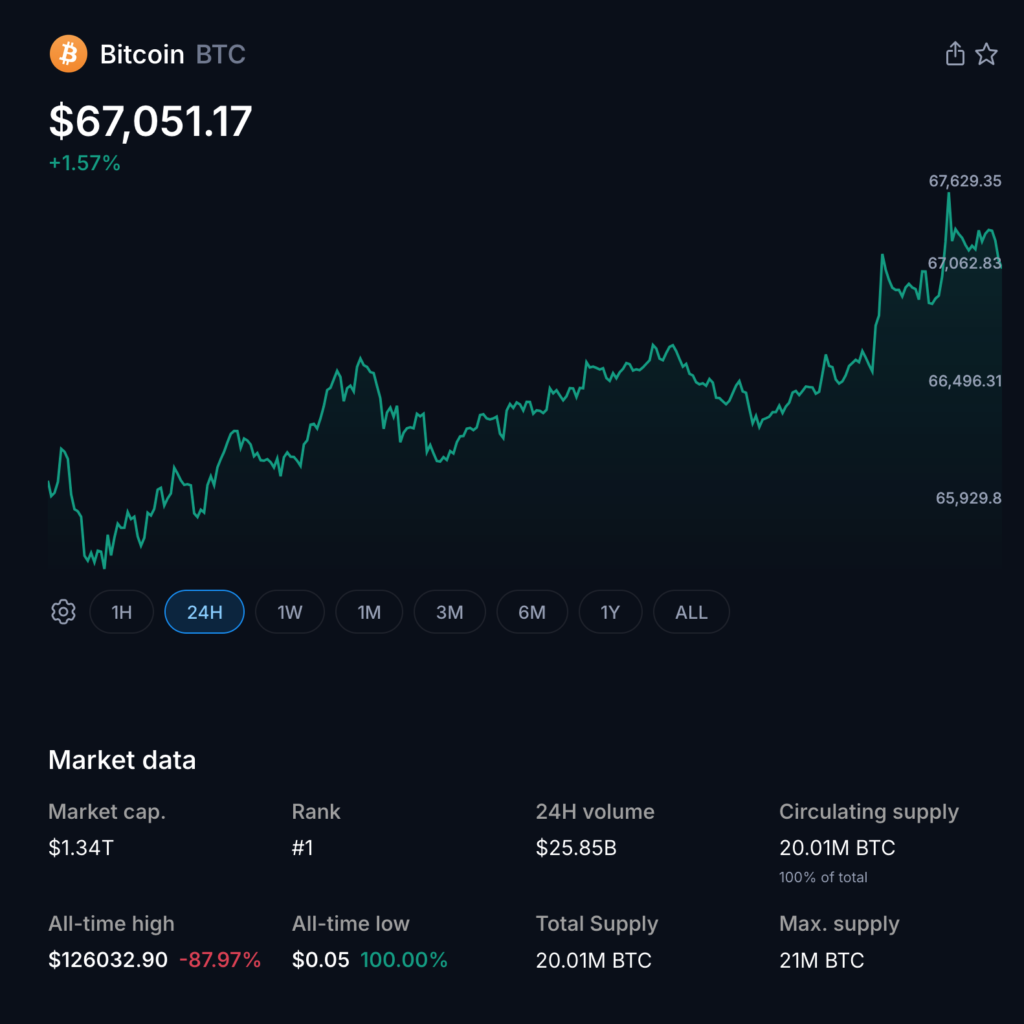
In a swift move that rattled markets, Bitcoin fell from $72,000 to $65,500 in 48 hours as altcoins slid and total crypto market cap dropped to $2.37 trillion during Friday trade.
While price swings are nothing new in the crypto space, the speed and breadth of this decline drew renewed attention from traders who have watched similar episodes unfold in previous cycles.
The drop reminded traders that this space can swing on a dime and that liquidity can evaporate just as quickly as it appears. That lesson is especially relevant today because many participants entered the market during periods of strong upward momentum. When markets rise steadily, investors often assume stability will continue.
Here's What They're Not Telling You About Your Retirement
However, digital assets frequently challenge that assumption, particularly when leverage builds across the system. Once selling begins, cascading liquidations can accelerate declines and amplify volatility.
For seasoned investors, the move underscores how momentum and leverage can overwhelm even seemingly entrenched narratives. Over the past year, optimism around institutional adoption and broader mainstream acceptance helped support higher valuations.
At the same time, those narratives can lose influence when macro conditions change. When risk appetite shifts, correlations across assets often spike, and the whole sector can move in unison. That pattern was visible during the recent decline, as losses spread quickly beyond Bitcoin.
This Could Be the Most Important Video Gun Owners Watch All Year
Altcoins led the decline, pulling the broader market lower with them. That dispersal suggests the selling pressure was not isolated to Bitcoin alone but reflected underlying risk sentiment spreading through the ecosystem.
Because many altcoins carry higher volatility and thinner liquidity, they often respond more dramatically when traders reduce exposure. As those assets fall, they can drag down confidence across the broader market, therefore reinforcing the downward momentum.
Trading floors and wallet balances swing with whispers about rate expectations and policy signals. In such an environment, traders seek protective positions and reduce exposure to highly correlated sectors. Concerns about inflation, central bank policy, and global liquidity continue to influence investor behavior.
When uncertainty rises, market participants tend to favor capital preservation. Therefore, speculative assets often experience the most pressure during these transitions.
The $2.37 trillion market cap figure captures the scale of this retreat. It marks a retreat from earlier peaks and invites questions about the resilience of the crypto complex.
While the total valuation remains historically elevated, declines of this magnitude highlight the importance of disciplined risk management. Investors who rely heavily on short term momentum strategies often find themselves exposed when sentiment changes abruptly.
From a macro lens, the move aligns with a cautious mood as investors weigh inflation, liquidity, and the pace of policy normalization. Because digital assets are still developing as a mature asset class, they tend to react strongly to broader economic signals.
As interest rates and liquidity conditions shift, capital flows adjust accordingly. This dynamic continues to tie crypto performance to the broader financial landscape.
Gold and other traditional safe havens often attract when crypto markets wobble. That dynamic has become a recurring feature that many portfolio managers monitor as a counterbalance to crypto risk. Some investors view this relationship as evidence that digital assets have not fully replaced traditional stores of value. Instead, they function alongside them, each serving a different role within diversified portfolios.
Longtime observers note that Bitcoin has flirted with the role of digital store of value, but volatility remains a defining feature. That volatility complicates portfolio construction for institutions and family offices alike.
While potential returns remain attractive, large price swings introduce uncertainty that more conservative allocators must consider carefully. As a result, many prefer measured exposure rather than aggressive positioning.
If Bitcoin can defend a meaningful baseline and key support levels, a technical bounce could unfold. Market participants often watch these levels closely because they can influence short term sentiment. A stabilization period could encourage sidelined capital to reenter the market. At the same time, caution remains warranted given recent volatility.
MORE NEWS: SpaceX Rockets Into Nasdaq-100 as Fast-Tracked Inclusion Sparks Massive ETF Buying Frenzy
Otherwise the drawdown could extend as momentum traders unwind and liquidity moves to the sidelines.
When leveraged positions unwind, selling pressure can persist longer than expected. Therefore, investors often look for signs of consolidation before assuming a durable recovery.
In this environment asset allocators are reminded to favor diversification and prudent risk controls.
A balanced approach allows investors to participate in potential upside while limiting exposure to sudden downturns. The recent decline serves as a timely reminder that disciplined strategy and measured expectations remain essential in a market defined by rapid change.
DISCLAIMER: GoldInvestors.news is not a registered investment, legal or tax advisor or broker/dealer. All investment/financial opinions expressed by GoldInvestors.news are from the personal research and experience of the owner of the site and are intended as educational material. Although best efforts are made to ensure that all information is accurate and up to date, occasionally unintended errors and misprints may occur.
Join the Discussion
COMMENTS POLICY: We have no tolerance for messages of violence, racism, vulgarity, obscenity or other such discourteous behavior. Thank you for contributing to a respectful and useful online dialogue.