DISCLAIMER: GoldInvestors.news is not a registered investment, legal or tax advisor or broker/dealer. All investment/financial opinions expressed by GoldInvestors.news are from the personal research and experience of the owner of the site and are intended as educational material. Although best efforts are made to ensure that all information is accurate and up to date, occasionally unintended errors and misprints may occur.
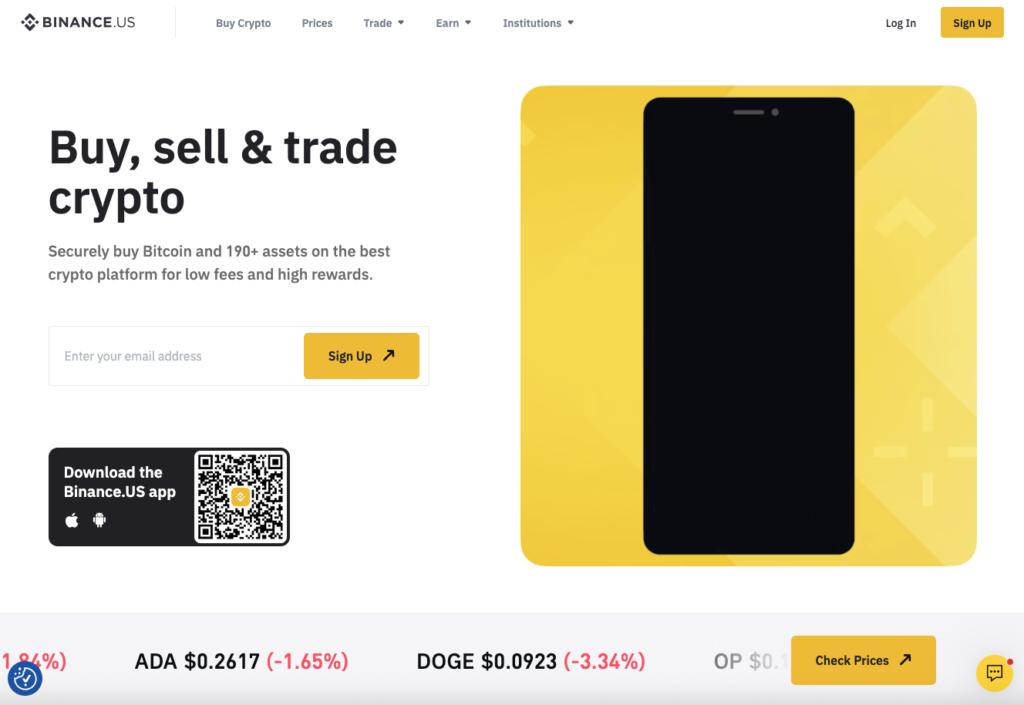
The U.S. Department of Justice has opened a formal inquiry into whether Iranian networks used the crypto exchange Binance to dodge American sanctions, a development first reported by The Wall Street Journal.
The probe centers on whether digital transactions were routed through the platform to mask the flow of funds, and it signals a broad push to test how sanctioned entities might exploit a sprawling borderless financial system.
Digital assets present a unique challenge to sanctions enforcement because blockchain data is transparent in theory yet exploited in practice to obscure flows, with sophisticated routing and mixing tactics complicating attribution.
The DOJ's focus on Binance underscores the friction between national regulation and a global, borderless instrument that has repeatedly proven resistant to simple jurisdictional remedies.
Here's What They're Not Telling You About Your Retirement
The case sits at the crossroads of criminal enforcement and financial policy, highlighting how sanctions breaches can ripple through exchanges, investors, and state actors, threatening to elevate risk premiums and disrupt liquidity in both traditional markets and digital trading venues.
Officials insist the investigation is about illicit evasion, not a wholesale indictment of the entire crypto industry, but the framing matters because it guides how other exchanges implement risk controls and how policymakers calibrate penalties.
Binance, as a leading global exchange, has repeatedly claimed a strong compliance program and robust screening that aligns with international sanctions regimes, which it says are continuously updated through cooperation with regulators.
Nevertheless, prosecutors are reportedly reviewing whether certain participants exploited gaps in due diligence to move value around sanctions, a possibility that would put the exchange's governance under intense scrutiny and could force visible changes in its risk controls.
This Could Be the Most Important Video Gun Owners Watch All Year
Tracing crypto flows is a technical challenge, because blockchain records are public yet linking wallets to real world identities remains difficult, and it requires cross agency cooperation, consent from services, and advanced analytics.
The DOJ's work likely involves both traditional investigative methods and specialized blockchain forensics that combine data analytics, informant networks, and cooperation with foreign authorities.
Mechanisms such as layered transfers, the use of stablecoins, and cross border bridging can complicate attribution due to rapid, multi jurisdictional movement and the potential use of intermediaries.
As investigators map routes, they also test exchanges' adherence to OFAC and other sanctions regimes, assessing how real time screening, transaction monitoring, and record keeping align with legal standards.
The implications extend beyond a single case because sanctions enforcement relies on credible networks, consistent standards, and clear rules that give market participants confidence in price discovery and risk management.
If the probe reveals gaps in major exchanges, policymakers may push tighter know your customer requirements and automatic screening, with cascading effects on liquidity, settlements, and the ability of legitimate buyers to move capital quickly.
The drift toward stricter controls should be balanced by clarity, due process, and proportionate penalties that reflect actual risk, not bureaucratic overreach that slows productive investment.
The core argument is that free markets punish fraud with information and competition, not bureaucratic overreach that disadvantages compliant participants while creating unintended holes for misconduct.
Still, fiat and crypto markets are deeply interwoven, and the state has a legitimate interest in ensuring national security, preventing funds from financing terrorism, human trafficking, or illicit weapons programs.
Investors should expect more careful risk management and due diligence from both institutions and counterparties, including enhanced transparency in beneficiary ownership and improved auditing of transaction paths.
Historically, sanctions evasion stories have underscored the incentive for bad actors to exploit the most opaque corners of the financial system, and that reality continues to drive regulators to seek sharper information flows and faster enforcement.
This reality pushes not only exchanges but banks and regulators to improve transparency and cooperation, aligning deterrence with market discipline and the risk of penalties.
The Wall Street Journal report thus serves as a bellwether for how agg
ressive enforcement could shape the crypto landscape, pushing exchanges toward uniform compliance programs and clearer governance structures. It also raises questions about international coordination, technology controls, and the speed with which law and markets adjust to rapid innovations and shifting geopolitical incentives.
For now, markets should watch for official disclosures and evolving guidance from regulators, as new rulings and watch lists can redraw liquidity and counterparty risk overnight.
If the investigation proceeds, expect a sharpened focus on sanctions compliance across the crypto sector, including stricter licensing, enhanced monitoring, and potential penalties for noncompliance.
DISCLAIMER: GoldInvestors.news is not a registered investment, legal or tax advisor or broker/dealer. All investment/financial opinions expressed by GoldInvestors.news are from the personal research and experience of the owner of the site and are intended as educational material. Although best efforts are made to ensure that all information is accurate and up to date, occasionally unintended errors and misprints may occur.
Join the Discussion
COMMENTS POLICY: We have no tolerance for messages of violence, racism, vulgarity, obscenity or other such discourteous behavior. Thank you for contributing to a respectful and useful online dialogue.