DISCLAIMER: GoldInvestors.news is not a registered investment, legal or tax advisor or broker/dealer. All investment/financial opinions expressed by GoldInvestors.news are from the personal research and experience of the owner of the site and are intended as educational material. Although best efforts are made to ensure that all information is accurate and up to date, occasionally unintended errors and misprints may occur.
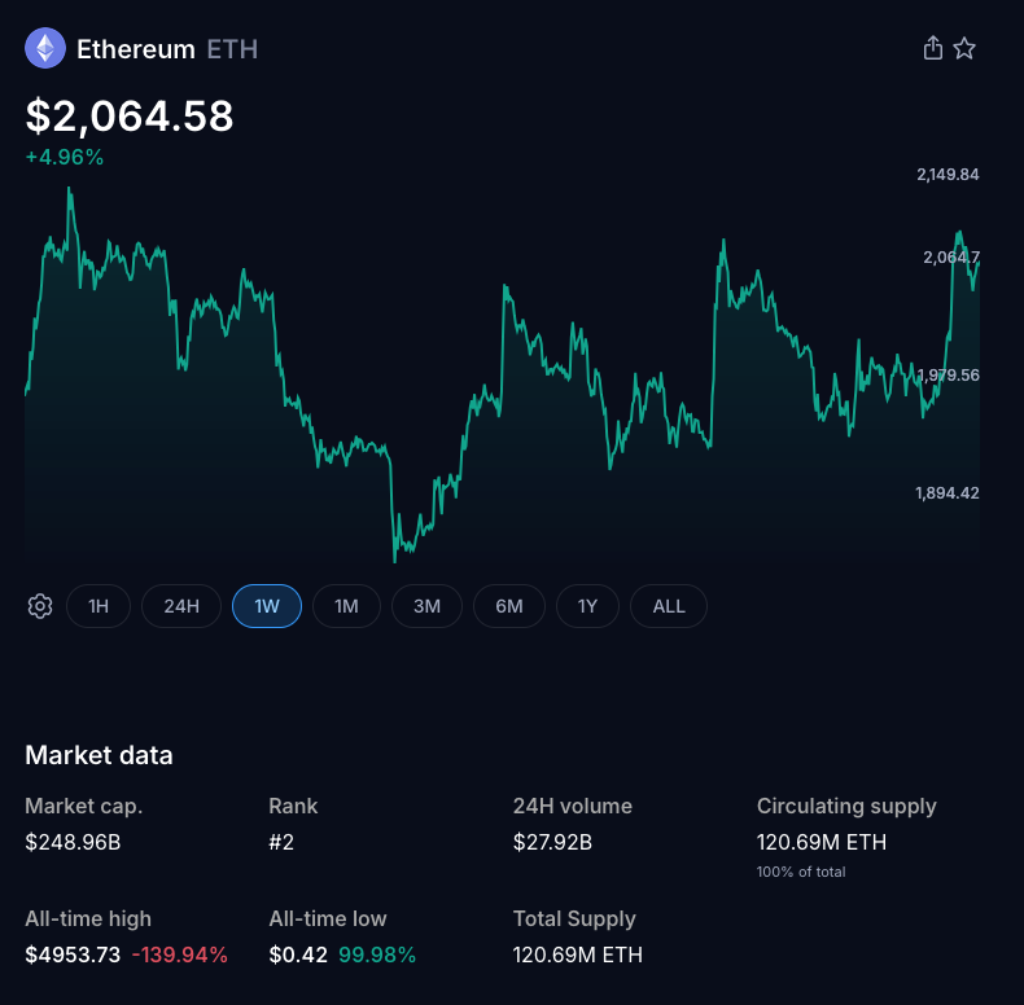
Ethereum continues to test the critical $2,000 level as traders weigh whether the round number will hold as a durable floor or give way to renewed selling pressure amid a cautious backdrop for risk assets.
At the time of writing, ETH hovered around $2,001, reflecting a 4.3 percent decline over the last 24 hours as investors reassess risk and reward in a global economy facing inflation risk and policy uncertainty.
The latest on chain activity underscores a crucial shift in market dynamics as withdrawals from centralized exchanges surged to their highest level since November, a move watched by traders across desks and screens.
This movement implies more coins being pulled off exchange balance sheets into personal wallets or cold storage, a trend that can tighten near term liquidity and alter selling pressure particularly during periods of rising volatility and uncertain funding.
Here's What They're Not Telling You About Your Retirement
Analysts interpret the withdrawal spike as a signal that market liquidity could be tightening in ways that are not yet captured by price alone and that risk metrics may lag actual behavior.
If this outflow persists, it may embolden buyers who view the current price as an attractive entry point and increase the odds of a measured rebound in a market that prizes discipline and patient capital.
The $2,000 area represents a psychological floor that could determine the immediate direction of price action for the next several days as traders await catalysts.
This Could Be the Most Important Video Gun Owners Watch All Year
A successful hold could encourage a cautious recovery, while a break lower might invite a broader retrace and test of multiweek moving averages.
From a macro perspective, the movement illustrates how on chain activity and exchange balances interact with wider liquidity conditions to shape asset prices and influence the risk premium investors demand. In a market dominated by fast moving funds and high liquidity risks, distribution shifts on chain often foreshadow shifts in momentum that traders monitor with a wary eye.
Historically, spikes in withdrawals have been associated with stronger self custody preferences and a gentler selling environment, as traders retreat from the quick exit offered by exchanges during episodes of heightened uncertainty.
That inclination reflects prudent risk management among institutions and individuals who fear sudden volatility and want to avoid close margin calls and preserve liquidity for opportunistic entries.
Yet some observers warn that prolonged illiquidity on the sell side can backfire if demand deteriorates, creating a trap where prices slip faster than expected as fundamentals struggle to catch up with sentiment.
In such scenarios price action tends to become choppy and range bound, underscoring the difficulty of predicting near term moves for both bulls and bears alike.
Market participants will also scrutinize options markets and open interest for signs of fear or appetite, though data in highly dynamic sessions can be noisy, especially when liquidity dries up and bid offers thin.
The lack of clear directional signals means traders must balance caution with disciplined risk management, avoiding overconfidence in speculative bets even as leverage remains tempting for some.
Beyond Ethereum, the broader crypto space remains highly sensitive to policy developments, central bank messaging, and regulatory signals that could affect liquidity and funding costs, creating a tight feedback loop between perception and price.
The macro backdrop will continue to influence risk appetite for tech assets and even traditional stores of value such as gold as investors seek hedges against systemic risk.
Investors should acknowledge the risk that the $2,000 floor could be tested before any meaningful upside emerges, especially if external shocks or sentiment shifts reframe risk versus reward and trigger rapid reassessment across correlated markets.
Diversification and nimble position sizing remain prudent as volatility continues to be a structure rather than an exception for households, institutions, and funds alike.
For long term holders, current dynamics might present an opportunity to accumulate gradually while maintaining strict risk controls and a sober view of the horizon built on a framework of disciplined capital allocation.
Short term traders should adhere to disciplined stop strategies and avoid overleverage, recognizing that liquidity can swing dramatically without warning and that the risk of whiplash remains real.
The market will reflect the tug between on chain supply discipline and the demand side responses of a cautious investor class who values capital preservation and measured risk as the cycle tests patience and conviction.
As liquidity patterns shift, the path of Ethereum will continue to serve as a barometer for the health of wider markets and the climate for prudent hedging and a sober assessment of risk versus reward over time.
DISCLAIMER: GoldInvestors.news is not a registered investment, legal or tax advisor or broker/dealer. All investment/financial opinions expressed by GoldInvestors.news are from the personal research and experience of the owner of the site and are intended as educational material. Although best efforts are made to ensure that all information is accurate and up to date, occasionally unintended errors and misprints may occur.
Join the Discussion
COMMENTS POLICY: We have no tolerance for messages of violence, racism, vulgarity, obscenity or other such discourteous behavior. Thank you for contributing to a respectful and useful online dialogue.