DISCLAIMER: GoldInvestors.news is not a registered investment, legal or tax advisor or broker/dealer. All investment/financial opinions expressed by GoldInvestors.news are from the personal research and experience of the owner of the site and are intended as educational material. Although best efforts are made to ensure that all information is accurate and up to date, occasionally unintended errors and misprints may occur.
Michael Saylor fired back vigorously after former UK Prime Minister Boris Johnson publicly questioned Bitcoin and framed it as potentially resembling a Ponzi scheme, arguing that the critique misreads both the technology and the incentives behind a decentralized monetary network. Johnson described a conversation with a church acquaintance who warned that crypto assets could attract unsustainable hype and leave ordinary investors exposed.
The clash underscored a deeper fault line in the ongoing debate over money, credit, and the proper role of a currency in a free market economy, especially when public policy intersects with private investment.
On one side are skeptics who doubt decentralized money, and on the other are investors who see digital assets as a hedge against fiat erosion and political mismanagement that erodes purchasing power.
Saylor has long argued that Bitcoin is a disciplined monetary technology with a predictable supply and a decentralized network that cannot be easily manipulated by policymakers, offering a transparent alternative to traditional money.
Here's What They're Not Telling You About Your Retirement
Therefore the critique that it is a Ponzi scheme ignores the architecture of the code and the long history of monetary experimentation that informs contemporary investing, especially for risk aware capital allocators.
From a conservative perspective, sound money and personal responsibility form the backbone of economic stability, reducing the temptation for unsustainable policy promises and protecting savers across generations.
Bitcoin, viewed through that lens, offers a form of digital gold that rewards savers rather than those who chase unsustainable speculative bubbles and easy profits at the expense of others.
Critics may point to volatility, energy use, or long cycles, but these are not fatal flaws in the technology so much as challenges shaped by politics, regulation, and the pace at which markets absorb new ideas.
This Could Be the Most Important Video Gun Owners Watch All Year
Investors who understand markets recognize that this asset obeys different rules than stocks or real estate and can provide ballast during inflationary periods when traditional safe havens falter.
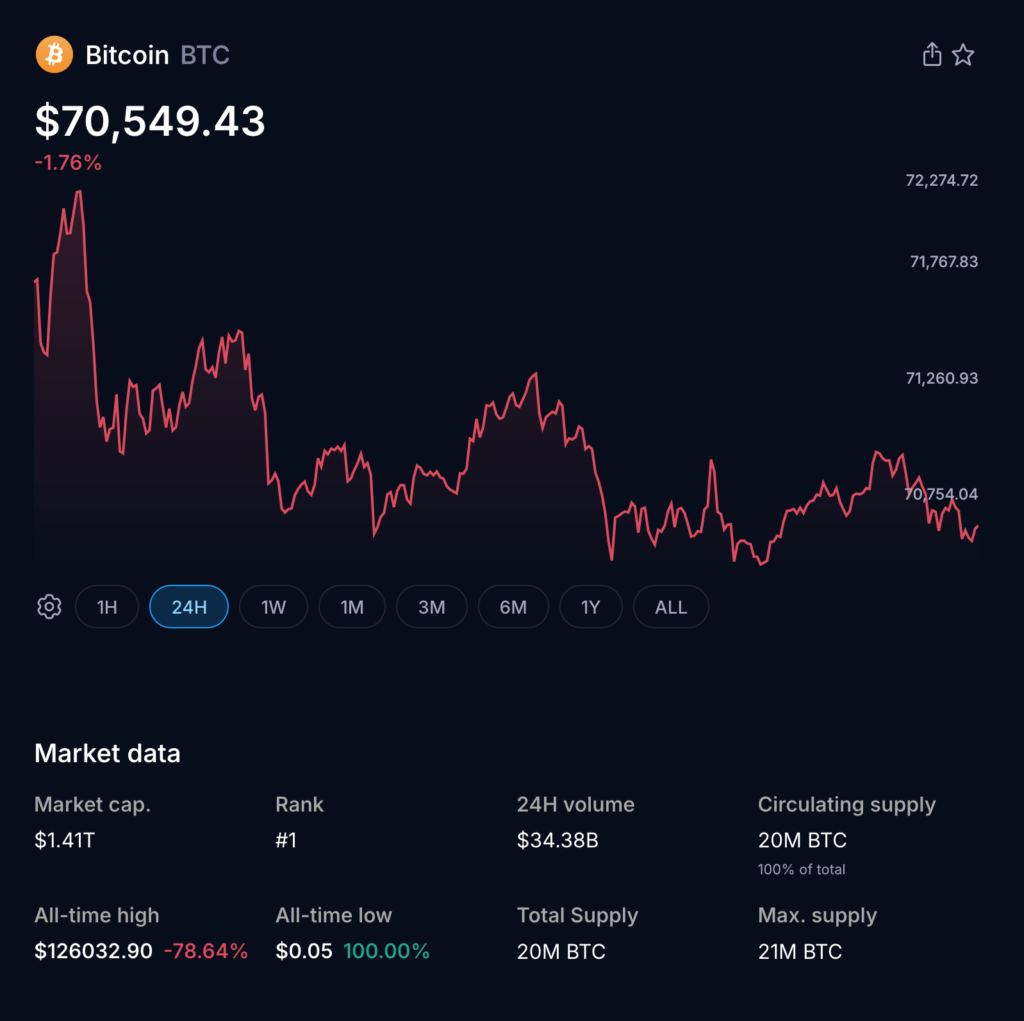
Bitcoin acts as a digital store of value for a generation that favors borderless finance and limited government intervention, characteristics that appeal to savers seeking resilience against political risk.
That framing aligns with the argument that traditional stores of value should be tested against new money rather than dismissed out of hand, especially when portfolios must withstand monetary volatility.
Johnson’s remarks arrived at a moment when central banks continue to run expansive monetary policies and accumulate large deficits, which many see as a direct threat to the long term credibility of fiat currencies.
Those conditions intensify the debate over whether a nonfiscal asset like Bitcoin can preserve purchasing power more reliably than government issued money when prices rise and confidence erodes.
Saylor himself has been a prominent buyer and advocate, turning corporate treasuries and private portfolios into testing grounds for digital assets and signaling that institutions can adopt Bitcoin without surrendering conservative guardrails.
His stance mirrors a broader move among sophisticated investors who see Bitcoin as a liquid hedge against creeping monetary erosion and political risk that could undermine future retirement standards.
As inflation concerns persist, the macro environment reinforces the argument for diversification and prudent exposure to assets that are not beholden to any single sovereign or political ideology.
Respect for free markets means recognizing that new technologies can coexist with proven monetary principles and eventually produce durable winners that enhance wealth while keeping government power in check.
Despite the noise from politicians and pundits, the fundamental proposition remains intact: a scarce, globally accessible monetary asset operates outside the reach of any single government's control.
Decisive investors are seeking credibility, security, and verifiable scarcity in a way that fiat money cannot guarantee over the long run, regardless of political noise.
Saylor’s rebuttal, though sharp, centers on evidence and track record rather than rhetoric, positioning Bitcoin as a structured, disciplined long term bet built on verifiable math and broad network adoption.
Whatever political headwinds exist, the policy environment cannot erase the logic of a decentralized, transparent monetary network that has persisted for more than a decade and continues to mature.
For investors, the takeaway is clear: assess risk, diversify across asset classes, and consider how digital currencies complement gold and other hard assets in a balanced portfolio.
Even in a volatile phase, the case for Bitcoin as a monetary innovation in the modern era remains compelling to those who value sound money and open markets.
DISCLAIMER: GoldInvestors.news is not a registered investment, legal or tax advisor or broker/dealer. All investment/financial opinions expressed by GoldInvestors.news are from the personal research and experience of the owner of the site and are intended as educational material. Although best efforts are made to ensure that all information is accurate and up to date, occasionally unintended errors and misprints may occur.
Join the Discussion
COMMENTS POLICY: We have no tolerance for messages of violence, racism, vulgarity, obscenity or other such discourteous behavior. Thank you for contributing to a respectful and useful online dialogue.