DISCLAIMER: GoldInvestors.news is not a registered investment, legal or tax advisor or broker/dealer. All investment/financial opinions expressed by GoldInvestors.news are from the personal research and experience of the owner of the site and are intended as educational material. Although best efforts are made to ensure that all information is accurate and up to date, occasionally unintended errors and misprints may occur.
Gold and silver prices steadied on Tuesday after Monday’s sharp selloff rattled investors and triggered bargain buying across the metals market.
The recovery came as traders balanced geopolitical worries in the Middle East with persistent strength in the U.S. dollar and rising oil prices, both key drivers shaping short-term sentiment in precious metals.
Spot gold traded near $4,563.30 an ounce, up 0.92% in early U.S. trading, while spot silver gained 1.65% to trade at $73.80 an ounce. The modest rebound followed a futures-driven plunge that saw May gold futures drop $110.40, or 2.38%, to $4,519.50, and May silver fall almost 4% to $73.072.
Monday’s decline set the stage for Tuesday’s correction, aided by thin liquidity with markets closed in China, Japan, and the U.K. Such conditions often intensify short-term price swings, particularly when paired with a mix of global uncertainty and technical selling.
Here's What They're Not Telling You About Your Retirement
At the same time, energy markets remain a central driver of inflation expectations and investor positioning. Oil prices remain elevated amid escalating tensions around the Strait of Hormuz, an essential artery for global energy flows.
A fire at the UAE’s Fujairah oil hub and new skirmishes involving U.S. and Iranian forces kept traders on alert, even as crude eased slightly from Monday’s highs.
The ripple effects of these developments have been widespread. While gold typically benefits from geopolitical turmoil, rising oil prices also amplify inflation concerns that can push bond yields higher and strengthen the dollar, both of which reduce gold’s appeal as a non-yielding asset. This tug-of-war continues to define the metal’s short-term direction.
This Could Be the Most Important Video Gun Owners Watch All Year
Brent crude for July delivery hovered near $112.73 a barrel, down 1.49%, while June WTI traded around $103.94, down 2.33%. Despite the modest pullback, both benchmarks remain near multi-month highs, reflecting a market nervous about disruption through one of the world’s most strategically important waterways.
Central banks, meanwhile, continue to walk a tightrope between fighting inflation and supporting slowing economies. The Reserve Bank of Australia raised its policy rate by 25 basis points to 4.35%, marking its third consecutive hike this year.
The move underscores global concern that elevated energy costs and lingering supply chain disruptions could keep inflation above target for longer than policymakers would like.
With the dollar index firming, gold’s gains remain capped, as traders await fresh data for direction. The focus will be on the JOLTS jobs report, ISM Services PMI, and remarks from Federal Reserve officials including Vice Chair Michelle Bowman and Governor Michael Barr.
These events, coupled with Friday’s key U.S. employment data, could determine how long the Fed maintains its cautious stance.
The yield on the 10-year U.S. Treasury note remains near 4.4%, reflecting persistent inflation anxiety and signaling that bond markets anticipate little room for early rate cuts. That environment tends to weigh on precious metals, which compete with yield-bearing assets for investor attention.
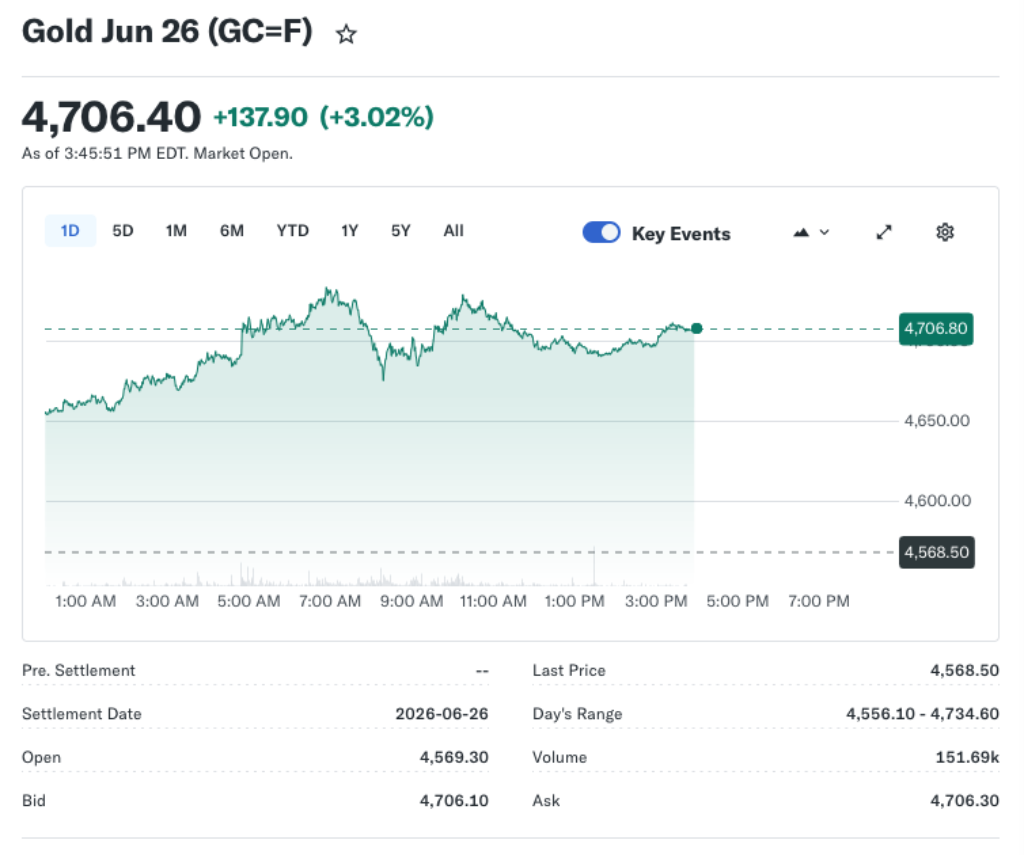
From a technical standpoint, gold remains in a consolidation phase. Bulls aim to push prices above the $4,568 to $4,615 resistance zone, which could open the door toward $4,630.70 or $4,670.
On the downside, support sits at $4,502.40, with deeper targets at $4,485 and $4,450. Momentum traders are monitoring these levels closely as volatility remains elevated.
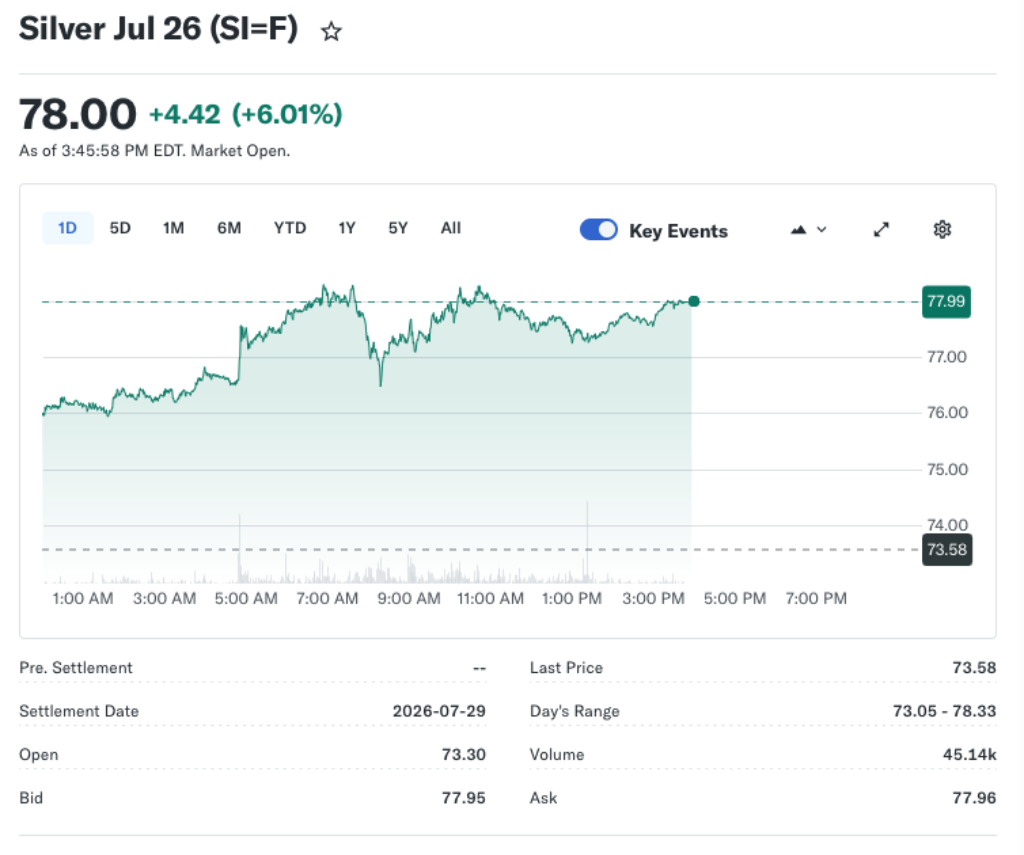
Silver’s technical picture mirrors gold’s. Bulls will look to challenge resistance between $73.80 and $75.00, with a break above that region potentially targeting $76.12.
Support holds at $72.10, followed by deeper levels at $71.00 and $70.00. The combination of safe-haven buying and industrial demand potential continues to anchor sentiment in the white metal.
While the broader macro backdrop remains uncertain, seasoned investors often view these phases as strategic opportunities to accumulate physical gold and silver on dips. Demand for tangible stores of value tends to strengthen in environments marked by geopolitical unrest, volatile energy prices, and central bank indecision.
As markets digest the latest headlines from the Middle East and await clarity on U.S. economic momentum, the push and pull between inflation fears, rate expectations, and safe-haven flows will dictate the next move for metals.
Traders appear increasingly wary of policy missteps that could send ripples across both currency and commodity markets.
For now, the metals trade remains a balancing act—caught between rising inflation pressure, a stubbornly strong dollar, and a world where conflict risk is never far from the surface.
DISCLAIMER: GoldInvestors.news is not a registered investment, legal or tax advisor or broker/dealer. All investment/financial opinions expressed by GoldInvestors.news are from the personal research and experience of the owner of the site and are intended as educational material. Although best efforts are made to ensure that all information is accurate and up to date, occasionally unintended errors and misprints may occur.
Join the Discussion
COMMENTS POLICY: We have no tolerance for messages of violence, racism, vulgarity, obscenity or other such discourteous behavior. Thank you for contributing to a respectful and useful online dialogue.