DISCLAIMER: GoldInvestors.news is not a registered investment, legal or tax advisor or broker/dealer. All investment/financial opinions expressed by GoldInvestors.news are from the personal research and experience of the owner of the site and are intended as educational material. Although best efforts are made to ensure that all information is accurate and up to date, occasionally unintended errors and misprints may occur.
Once upon a time in Silicon Valley, Elon Musk and Larry Page called each other friends.
That friendship, however, fell apart in 2015 after a birthday party dispute over whether humans or artificial intelligence deserved greater loyalty.
Musk favored humans, Page saw him as a “speciesist,” and the ideological divide between the two tech visionaries deepened.
Yet nearly a decade later, their companies are far more connected than their founders ever were. SpaceX, the rocket empire Musk built, and Google, co-founded by Page, are now bound by deep financial ties and billion-dollar business deals that neither man could have predicted when the conversation turned sour that fateful night.
Here's What They're Not Telling You About Your Retirement
The key to their unlikely reconvergence is money and mutual necessity. Back in 2015, Google invested $900 million in SpaceX, acquiring roughly 4.9 percent of the reusable rocket maker.
At the time, SpaceX was still expanding its Starlink satellite network, and Google’s bet appeared to be a long-term play on infrastructure and space connectivity.
Today, that stake has exploded in value to about $100 billion following SpaceX’s record-breaking IPO.
The irony is striking. While Musk and Page appear to have no interest in reconciling personally, their companies have never been more interdependent.
This Could Be the Most Important Video Gun Owners Watch All Year
Both are now staking their future on artificial intelligence—an area that originally drove them apart.
Earlier this month, SpaceX announced a massive $920 million per month deal leasing AI infrastructure to Google over a 32-month period.
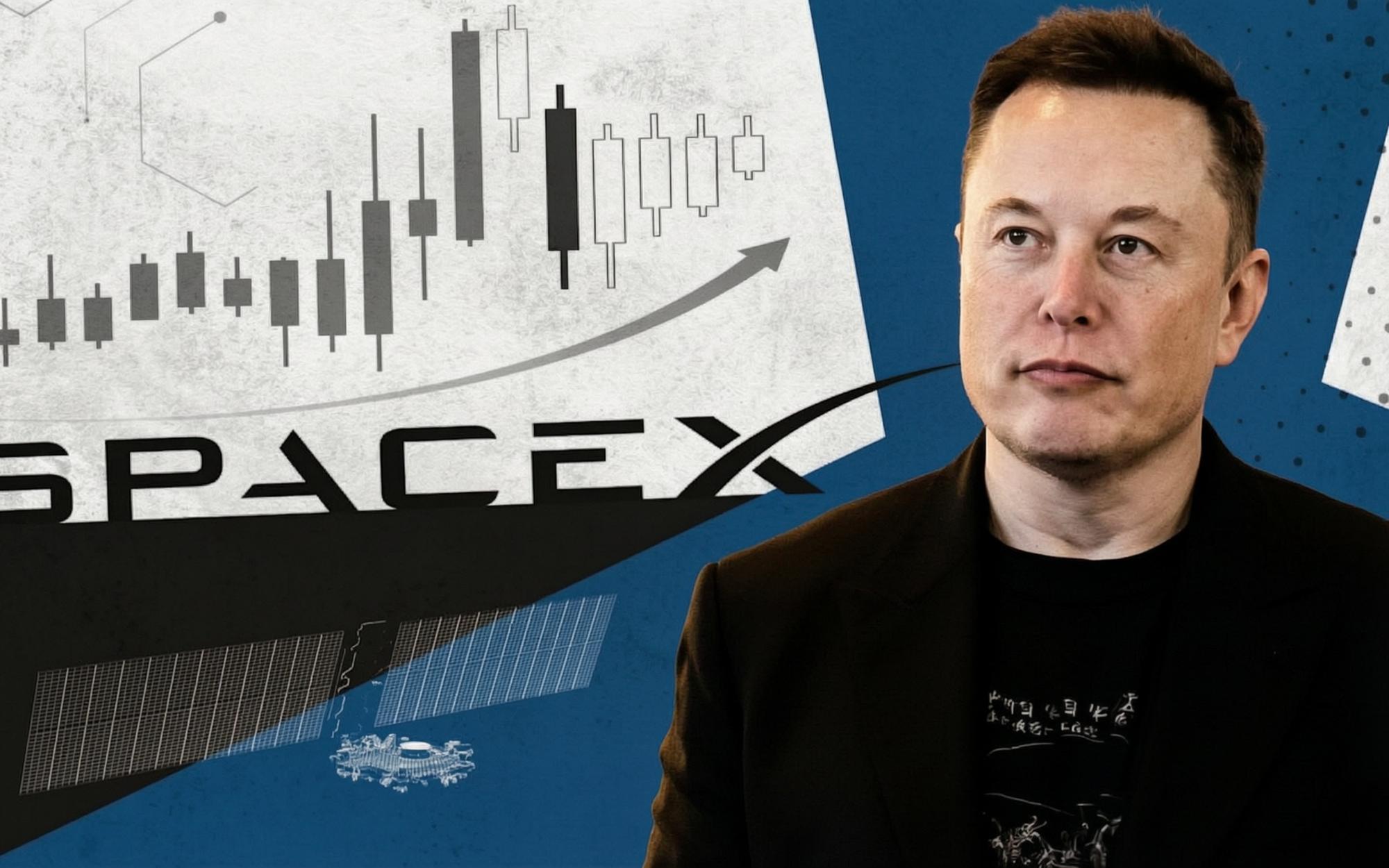
The total agreement, worth nearly $30 billion, will allow Google to scale its Gemini Enterprise platform more quickly in response to surging demand for advanced AI processing power.
For Musk, the deal represents both vindication and opportunity. While he was once an outspoken critic of Google’s AI ambitions, calling them a threat to human autonomy, his own companies are now at the forefront of developing similar technology.
SpaceX’s new Colossus data centers, located around Memphis, Tennessee, aim to serve as global AI compute hubs, allowing the company to capture revenue from cloud and AI customers—including its old rival.
The roots of this rivalry-turned-alliance run deep. In 2015, the same year Google invested in SpaceX, Musk co-founded OpenAI as a counterweight to Google’s DeepMind. He warned that Google’s control of AI could create a “monopoly over one of the world’s most powerful technologies.”
Musk even poached DeepMind researcher Ilya Sutskever to help build OpenAI, setting off a broader battle over talent, ethics, and the direction of machine learning research.
That war of ideas stretched beyond artificial intelligence into other fields where the two visionaries clashed. Google’s self-driving car division, now known as Waymo, went head-to-head with Tesla in the autonomous vehicle race.
Musk mocked Waymo’s reliance on costly lidar sensors while boasting that Tesla’s camera-based system would deliver true self-driving capability sooner.
So far, Waymo appears to have the upper hand, operating thousands of robotaxis across 11 U.S. cities, while Tesla has only about 50 branded Robotaxi vehicles testing mostly in Austin, Texas.
The competition grew more complex in 2021 as Google Cloud and SpaceX struck a seven-year agreement to support Starlink, Musk’s satellite internet venture.
SpaceX began relying on Google’s private fiber-optic network to connect its global constellation to cloud services, further blending their corporate interests.
That partnership laid the groundwork for this year’s AI compute deal and, eventually, for SpaceX’s narrative as a diversified tech and space powerhouse—one that’s no longer merely about rockets, but about controlling the future backbone of digital communication and artificial intelligence.
Personal drama has never been far from business entwining. In 2022, reports surfaced that Musk had an affair with Nicole Shanahan, the ex-wife of Sergey Brin, Google’s other co-founder.
The Wall Street Journal claimed it caused Brin to file for divorce, though Musk denied the allegations and even posted a photo with Brin to downplay the tension. Though the scandal faded, it added another layer to the tangled web of relationships defining the world’s richest innovators.
By 2023, OpenAI had surged ahead of Google in public perception with ChatGPT, while Musk continued to pursue his own AI projects separate from the startup he helped found. Page, meanwhile, largely receded from public view but still benefited enormously from Google’s deepening links with Musk’s empire.
Now, SpaceX’s $30 billion AI deal with Google comes as Musk’s net worth surpasses $1 trillion, with Larry Page and Sergey Brin holding their usual positions near the top of the world’s wealth leaderboard.
Alphabet’s SpaceX equity stake alone is worth more than $100 billion—a profitable reminder that, even after ideological and personal disputes, business has a way of bridging divides.
Whether it’s mutual convenience, cleverly aligned incentives, or pure capitalist pragmatism, the relationship between SpaceX and Google serves as a case study in how rival tech giants ultimately converge when opportunity outweighs ego.
The same two men who once clashed over what it means to be human have now built enterprises that may define the next era of machine intelligence—and they are once again linked, not by friendship, but by fortune.
DISCLAIMER: GoldInvestors.news is not a registered investment, legal or tax advisor or broker/dealer. All investment/financial opinions expressed by GoldInvestors.news are from the personal research and experience of the owner of the site and are intended as educational material. Although best efforts are made to ensure that all information is accurate and up to date, occasionally unintended errors and misprints may occur.
Join the Discussion
COMMENTS POLICY: We have no tolerance for messages of violence, racism, vulgarity, obscenity or other such discourteous behavior. Thank you for contributing to a respectful and useful online dialogue.