DISCLAIMER: GoldInvestors.news is not a registered investment, legal or tax advisor or broker/dealer. All investment/financial opinions expressed by GoldInvestors.news are from the personal research and experience of the owner of the site and are intended as educational material. Although best efforts are made to ensure that all information is accurate and up to date, occasionally unintended errors and misprints may occur.
Nvidia delivered another powerful earnings performance Wednesday, beating Wall Street forecasts and offering a stronger outlook as investors weighed whether the resurgent artificial intelligence trade still has room to run.
The report arrived after months of concern about technology spending, chip valuations, and the eventual returns from massive data center investments.
The semiconductor giant reported adjusted second quarter earnings of $2.22 per share on revenue of $96.2 billion.
Analysts had expected adjusted earnings of $2.09 per share and revenue of $92.3 billion, leaving Nvidia comfortably ahead of projections on both measures.
Management also projected third quarter revenue between $105.8 billion and $110.1 billion, signaling that demand for artificial intelligence computing remains formidable.
Nvidia shares initially dropped following the announcement before reversing course and climbing more than 7 percent in Thursday premarket trading.
The rapid reversal showed how demanding investors have become when evaluating Nvidia, even when the company exceeds already elevated expectations.
The stock is no longer judged merely against consensus estimates because markets increasingly expect dramatic growth from the company each quarter.
"AI has reached its inflection point. It's doing useful work. Its tokens are productive and profitable. Now, compute is revenue," Nvidia CEO Jensen Huang said in a statement.

His message framed artificial intelligence infrastructure as a revenue generating necessity rather than a speculative corporate experiment.
"And demand is accelerating. This time last year, one lab alone was driving the build-out; today, we have a golden age of new AI labs and startups, multiple frontier labs scaling in parallel, a thriving open-model ecosystem, and physical AI coming online — with strong momentum across the U.S. and around the world. The AI infrastructure build-out is at full steam. Vera Rubin, now in full production, was built to power exactly this moment."
Data Center revenue remained the central engine of Nvidia’s business, reaching $89 billion compared with the $85.8 billion analysts had projected. The segment includes sales to hyperscalers, artificial intelligence cloud providers, industrial customers, and enterprise buyers.
Chief Financial Officer Colette Kress said hyperscale revenue more than doubled during the quarter.
Revenue from the company’s industrial and enterprise customer category increased 138 percent, suggesting demand is broadening beyond the handful of technology giants that initially powered the boom.
Nvidia’s Edge Computing operations, which include gaming and physical artificial intelligence businesses, generated $7.2 billion in revenue.
That result also surpassed Wall Street’s estimate of $6.6 billion and demonstrated that Nvidia’s growth story is not entirely confined to enormous cloud data centers.
Even so, Nvidia continues to receive most of its revenue from hyperscalers including Amazon, Google, and Microsoft.
Those companies are developing proprietary processors to lower their reliance on Nvidia, and some are offering those chips to outside customers, creating a competitive threat that investors cannot afford to dismiss.
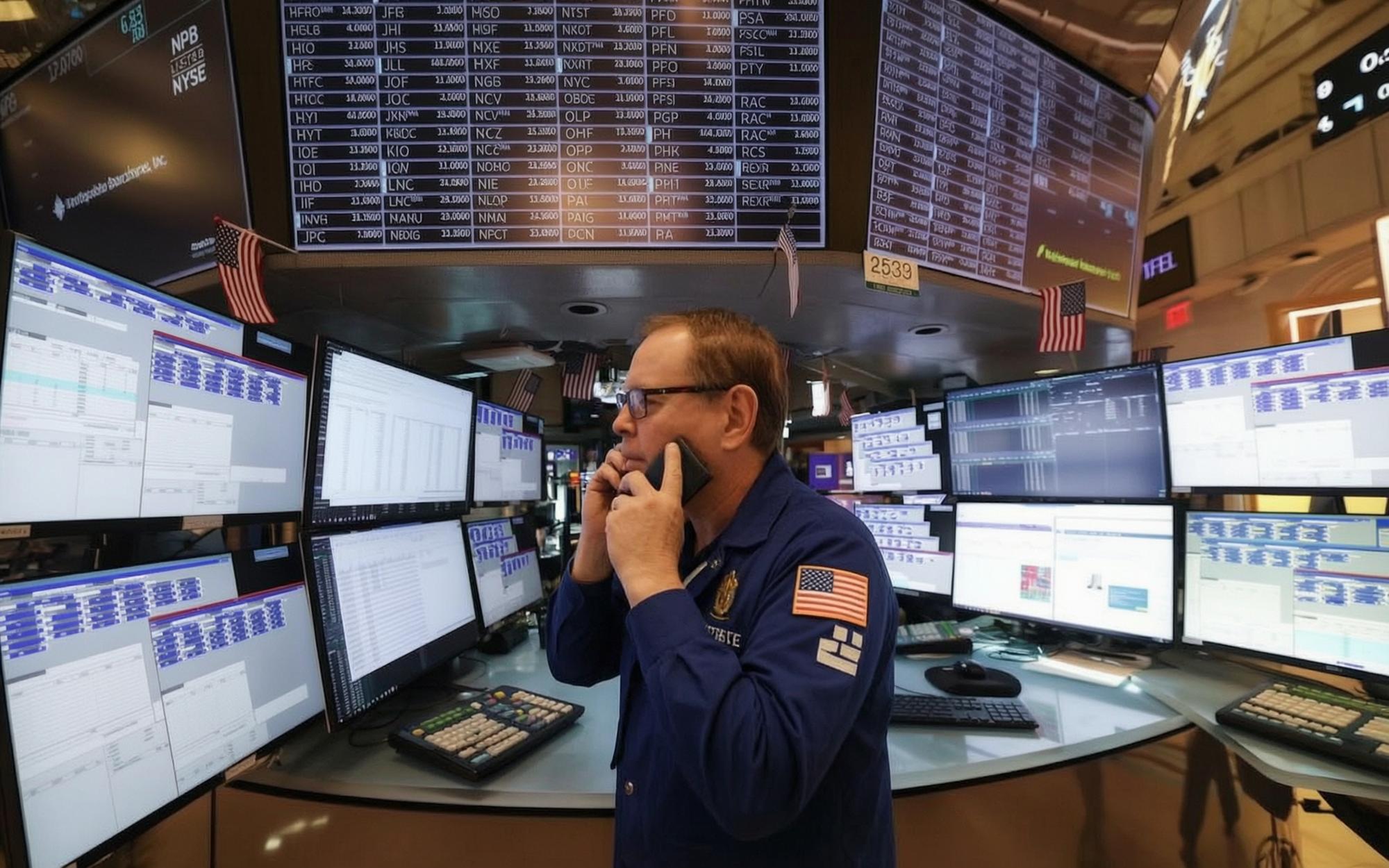
Strong cloud growth at Microsoft, Amazon, and Google has eased some anxiety about an imminent collapse in infrastructure demand.
However, rising capital expenditures at Google and Meta have unsettled investors who want evidence that extraordinary spending will translate into durable profits rather than expensive unused capacity.
Those questions have weighed on semiconductor shares during the past three months, as markets reconsidered how quickly companies can earn returns from their artificial intelligence investments.
Nvidia’s latest numbers provide an emphatic answer on current demand, but they cannot eliminate concerns about long term financing, competition, and capital discipline.
Nvidia is increasingly stepping into the financing gap as ambitious customers struggle to fund all the infrastructure they want.
Earlier this month, the company announced plans to work with BlackRock, Blackstone, KKR, Apollo, Brookfield, and Goldman Sachs to create a $500 billion capital pool that would securitize Nvidia graphics processors.
The company is also backing efforts by SB Energy and OpenAI to construct a massive eight gigawatt data center in Ohio, potentially involving as much as $150 billion of investment.
These arrangements could expand the pool of customers capable of buying Nvidia hardware, although they also bind the chipmaker more closely to the financial health of the wider artificial intelligence ecosystem.
For shareholders, the report reinforces Nvidia’s commanding position at the center of the computing buildout.
Yet the stock’s volatile initial reaction offered a reminder that tremendous expectations carry tremendous risk, especially when one company has become a benchmark for the entire artificial intelligence trade.
Nvidia passed this quarterly test with stronger earnings, accelerating demand, and a forecast that topped expectations.
The next test will be whether customers can generate enough cash from artificial intelligence to justify the historic torrent of capital now pouring into chips, power systems, and data centers.
DISCLAIMER: GoldInvestors.news is not a registered investment, legal or tax advisor or broker/dealer. All investment/financial opinions expressed by GoldInvestors.news are from the personal research and experience of the owner of the site and are intended as educational material. Although best efforts are made to ensure that all information is accurate and up to date, occasionally unintended errors and misprints may occur.
Join the Discussion
COMMENTS POLICY: We have no tolerance for messages of violence, racism, vulgarity, obscenity or other such discourteous behavior. Thank you for contributing to a respectful and useful online dialogue.