DISCLAIMER: GoldInvestors.news is not a registered investment, legal or tax advisor or broker/dealer. All investment/financial opinions expressed by GoldInvestors.news are from the personal research and experience of the owner of the site and are intended as educational material. Although best efforts are made to ensure that all information is accurate and up to date, occasionally unintended errors and misprints may occur.
A recent study conducted by the Bitcoin Policy Institute surveys how modern AI models respond to monetary stress and opportunity when the question concerns which money is preferred in a simulated economy.
The researchers examined thirty six AI models and found a clear tilt toward Bitcoin and other digitally native forms of money under the test conditions.
That tilt matters because it aligns currency preference with a system that offers portable, digital sovereignty.
In plain terms, the simulations suggest that crypto native money can resist certain types of pressure that would erode confidence in fiat within an artificial economy.
Here's What They're Not Telling You About Your Retirement
AI models in the study faced scenarios ranging from inflationary shocks to sudden shifts in transaction costs and access.
In several cases Bitcoin emerged as the preferred store and medium of exchange, primarily due to its fixed supply properties and network effects that the models treated as reliable anchors.
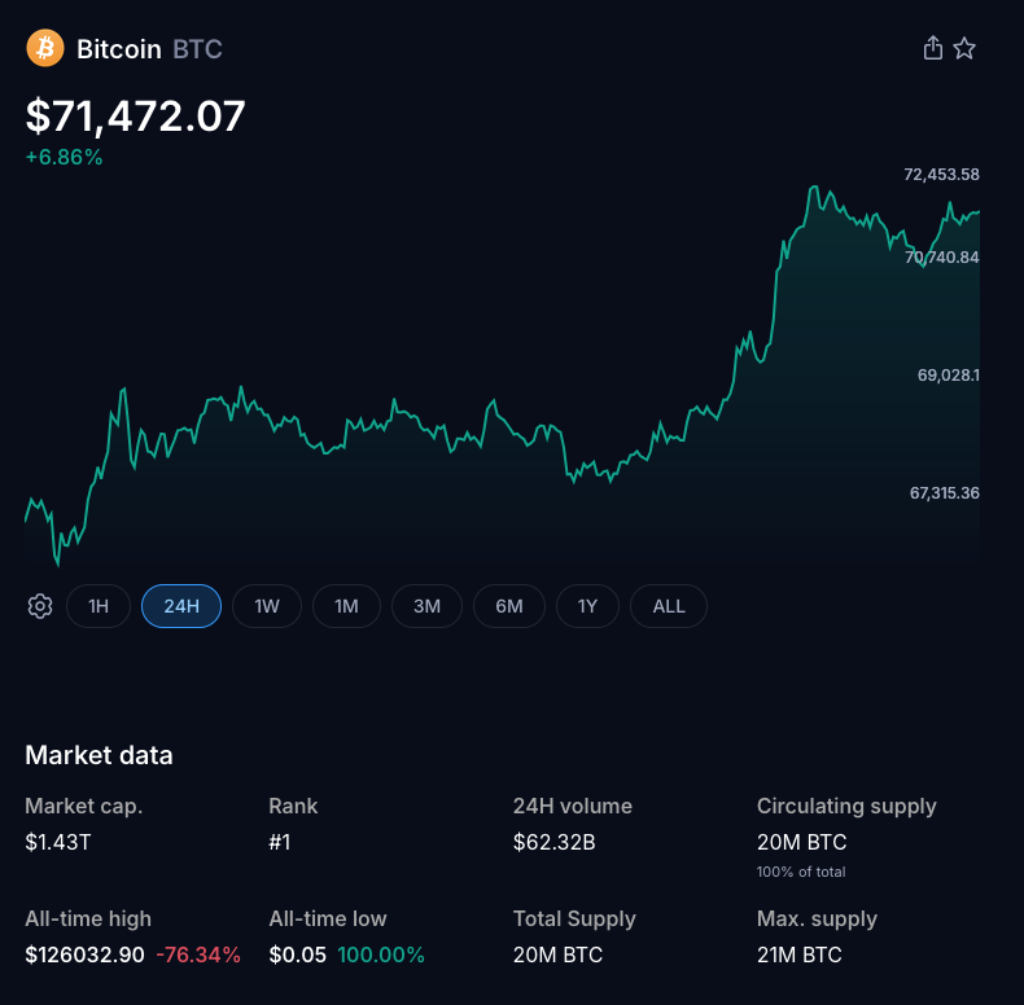
Methodologically the study relies on a controlled framework where inputs are varied and outcomes are logged.
This Could Be the Most Important Video Gun Owners Watch All Year
The reported finding that Bitcoin leads the pack rests on quantitative measures of utility, liquidity, and resilience during simulated cycles.
From a policy perspective the results raise questions about sovereignty and monetary experimentation.
If intelligent agents gravitate toward a hard form of money in controlled environments, governments may face new pressure to reexamine controls, oversight, and the safety net that accompanies fiat systems.
Critics will note that AI preferences in digital laboratories do not automatically translate into real world adoption.
Real economies require trust, network effects, and practical infrastructure that AI simulations cannot easily replicate.
Still the trend matters for portfolio construction and risk management.
Investors should consider a potential role for digital money in hedging against currency debasement and political risk, alongside traditional assets such as gold and silver which historically preserve value when confidence in paper money wanes.
Gold and other precious metals have long served as enduring stores of value, and the emergence of Bitcoin as a digital counterpart has accelerated the debate.
The study underscores that digital assets can function as both speculative instruments and potential hedges when the macro environment becomes unglued.
Regulators must weigh speed with prudence, not ideological zeal.
The AI findings push toward acknowledging digital money as a legitimate and potentially stabilizing force without granting it unearned legitimacy or bypassing necessary safeguards.
Industry participants should keep in mind that simulated preferences do not guarantee scalable adoption. The absence of universal endorsement by real users, merchants, and institutions remains a crucial caveat that accompanies any optimistic forecast.
Looking ahead, the conversation will center on property rights, code as law, and the capacity of private networks to sustain value.
If digital money truly proves resilient where fiat fails, the political economy will tilt toward greater autonomy for savers and investors who insist on independence from state controlled money.
In the end the Bitcoin Policy Institute study offers a sober reminder that the architecture of money is increasingly digitized and contestable.
It challenges conventional complacency and invites a pragmatic assessment of sound money that can endure the tests of time and crisis.
DISCLAIMER: GoldInvestors.news is not a registered investment, legal or tax advisor or broker/dealer. All investment/financial opinions expressed by GoldInvestors.news are from the personal research and experience of the owner of the site and are intended as educational material. Although best efforts are made to ensure that all information is accurate and up to date, occasionally unintended errors and misprints may occur.
Join the Discussion
COMMENTS POLICY: We have no tolerance for messages of violence, racism, vulgarity, obscenity or other such discourteous behavior. Thank you for contributing to a respectful and useful online dialogue.