DISCLAIMER: GoldInvestors.news is not a registered investment, legal or tax advisor or broker/dealer. All investment/financial opinions expressed by GoldInvestors.news are from the personal research and experience of the owner of the site and are intended as educational material. Although best efforts are made to ensure that all information is accurate and up to date, occasionally unintended errors and misprints may occur.
Wall Street analysts warn that the benefits of the latest tax reform could be offset if oil prices stay stubbornly high for an extended period.
The math is straightforward and consequential: higher energy bills compress household budgets even as tax relief ripples through corporate payrolls and retail spending.
Prices lifted by supply constraints and geopolitical tension create a drag on real incomes that tax cuts might not immediately counteract.
When the energy portion of consumer outlays climbs, the intended gains from reform look smaller, and households feel the pinch in every monthly bill.
Here's What They're Not Telling You About Your Retirement
To be sure, the tax law delivered visible relief on paper, but the durability of that relief depends on the trajectory of energy prices.
If the oil market continues to test new highs, the net effect on households could be a wash or worse.
Market forecasters emphasize the balance of risk: a prolonged price plateau for oil would raise costs in fuel, heating, and transportation while wages and wage gains lag behind.
The resulting squeeze hits discretionary spending and could slow the broader recovery.
This Could Be the Most Important Video Gun Owners Watch All Year
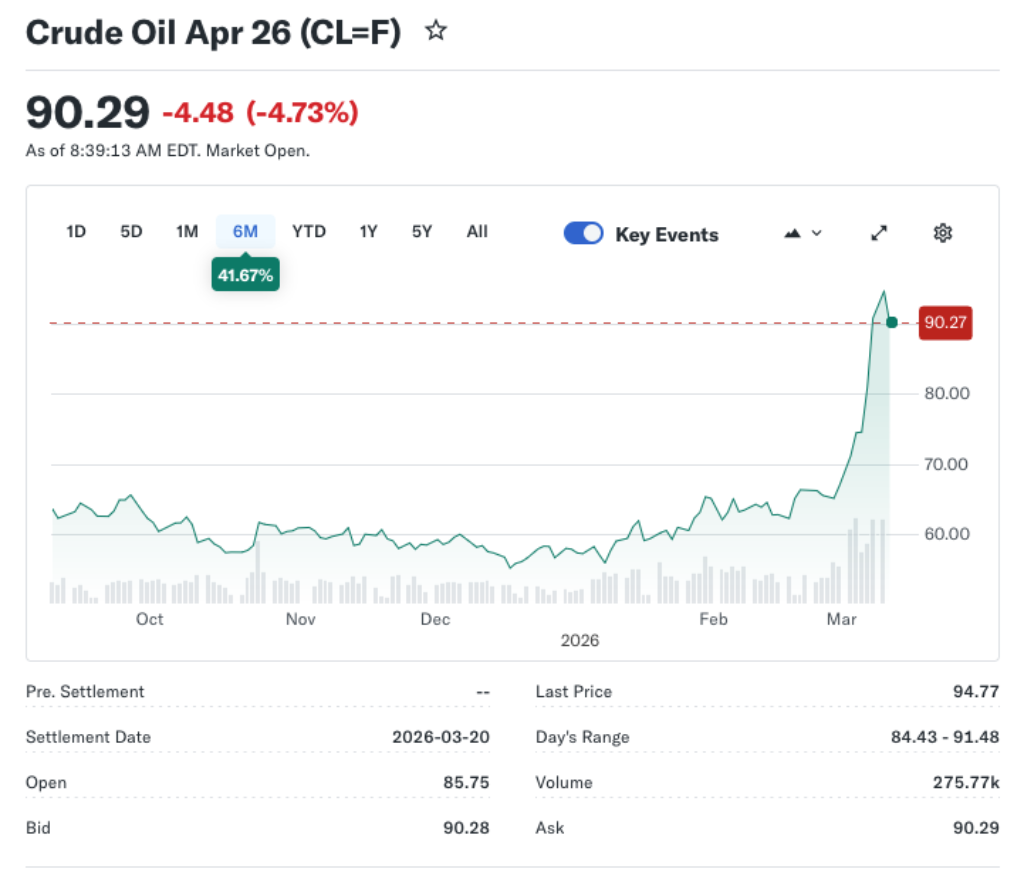
One Wall Street note highlights two scenarios: oil remains elevated and households face higher energy bills, or prices retreat and the tax windfall remains largely intact.
In the former case, the tax law's net benefits shrink as energy costs leak away through prices.
Consumers are already feeling the pressure from higher gasoline and heating costs, especially in regions with volatile energy markets.
The tax reform's promise of quicker relief could be eclipsed by a steady drip of energy-related expenses.
Companies that rely on energy inputs may experience sharper margins if oil stays high, while consumers face cutbacks in nonessential purchases.
Credit conditions and investment plans could tighten as business confidence wobbles amid price volatility.
Investors are watching the energy complex and the inflation outlook closely, because the two fields interact in ways that affect bond yields, stock valuations, and precious metals markets.
A disciplined allocation now could preserve capital as the cycle turns.
Forecasts increasingly suggest hedges in hard assets may be prudent when energy price volatility erupts.
The goal is to protect purchasing power in a period where policy promises collide with commodity dynamics.
Policy missteps could amplify the effect, as mistaken hopes for a quick energy trough lead to delayed price normalization.
In such cases, monetary policy may respond with uncertainty, complicating the outlook for growth and debt service.
From a conservative perspective, the focus should be on scalable fiscal relief balanced by a disciplined energy policy that does not rely on artificially low energy costs to drive growth.
Market forces, not political fiat, should guide investment and consumption decisions.
Ultimately, the collision between energy prices and tax policy tests the resilience of households and markets alike, reminding investors to separate headline gains from real, durable prosperity.
The prudent path is vigilance, balance, and a willingness to adapt as conditions shift.
DISCLAIMER: GoldInvestors.news is not a registered investment, legal or tax advisor or broker/dealer. All investment/financial opinions expressed by GoldInvestors.news are from the personal research and experience of the owner of the site and are intended as educational material. Although best efforts are made to ensure that all information is accurate and up to date, occasionally unintended errors and misprints may occur.
Join the Discussion
COMMENTS POLICY: We have no tolerance for messages of violence, racism, vulgarity, obscenity or other such discourteous behavior. Thank you for contributing to a respectful and useful online dialogue.