DISCLAIMER: GoldInvestors.news is not a registered investment, legal or tax advisor or broker/dealer. All investment/financial opinions expressed by GoldInvestors.news are from the personal research and experience of the owner of the site and are intended as educational material. Although best efforts are made to ensure that all information is accurate and up to date, occasionally unintended errors and misprints may occur.
A rising chorus of risk signals argues there is little room for gold prices to retreat in the near term, as central banks contend with aftershocks from a credit cycle that never fully loosened.
That view rests on vulnerabilities building in private credit markets that could spill into broader financial conditions and, therefore, lift demand for safe haven assets as investors seek protection against surprise from funding squeezes to liquidity dry spells.
Private credit markets have grown substantially outside traditional banks, and their vulnerabilities are not merely theoretical, because in many jurisdictions these funds now underwrite a sizable share of corporate and consumer borrowing, and their performance directly influences market liquidity.
Liquidity tightness, covenant squeezes, and rising funding costs create a fragility cushion that could snap in a downturn, forcing borrowers to seek refinancing at higher rates and triggering knock-on effects across corporate debt and consumer credit, with spillovers into financial markets, including bank funding, asset valuations, and risk premia.
Here's What They're Not Telling You About Your Retirement
When private lenders pull back, funding becomes scarcer for households and small businesses, and that can slow growth, especially for capital expenditures and working capital needs.
In a slow or late-cycle economy, the risk of a credit shock feeds financial anxiety across asset classes, including equities and commodities, and it can distort risk premia for longer periods.
Under such conditions, investors have a historical habit of turning to gold as a store of value and a hedge against monetary and financial uncertainty.
That role tends to intensify when credit markets show structural stress rather than cyclical weakness, because the balance sheets of nonbank lenders look disproportionately exposed to the same macro forces hitting banks.
This Could Be the Most Important Video Gun Owners Watch All Year
The current setup bears emphasis because central banks and policymakers have kept liquidity abundant for years.
If private credit strains intensify, the absence of normal monetary tightening could prolong the economic pause, boosting the appeal of bullion for cautious savers and risk-averse institutions seeking liquidity during times of stress.
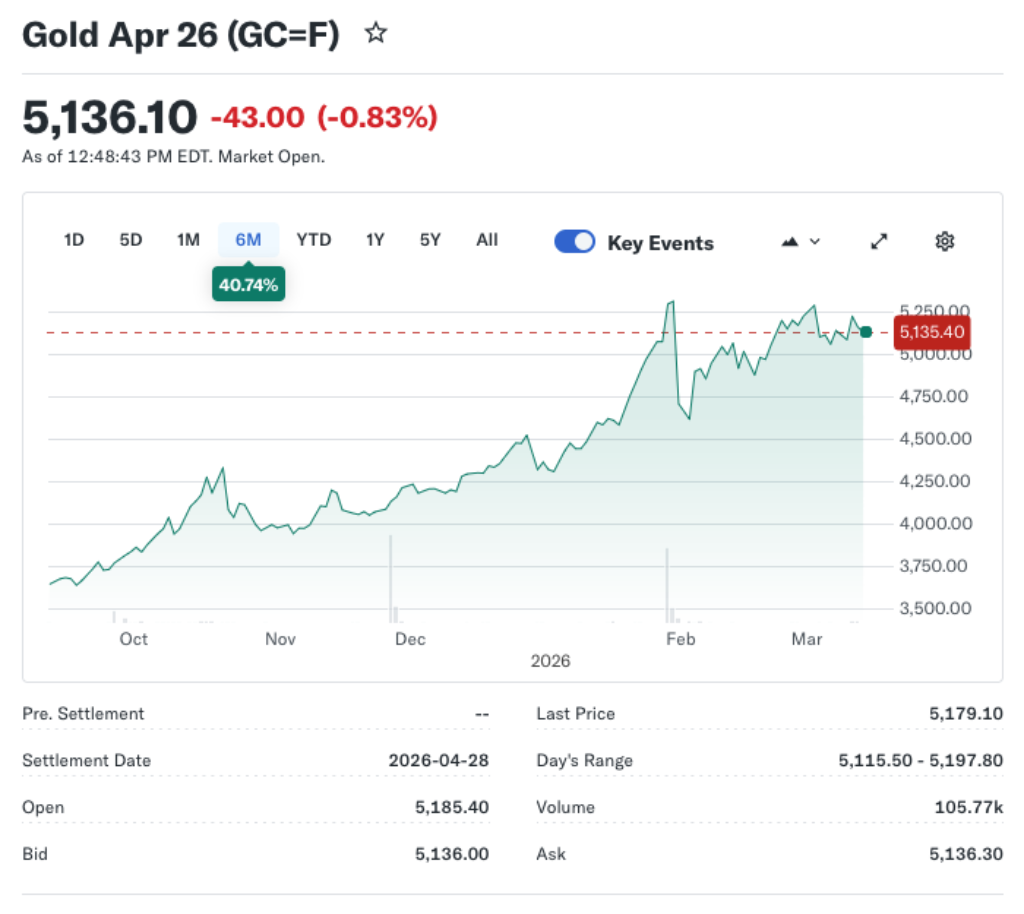
Gold does not rise in a vacuum, however. Its price dynamics are tethered to real yields, inflation expectations, and risk sentiment, all of which are shaped by credit market stress and the policy environment.
One seasoned analyst argues that the risk of a prolonged downturn increases the odds that bullion will remain bid.
If private lenders retreat, the marginal buyers who bid gold higher in frustration with slow growth could reassert themselves, keeping a floor under prices even when equities wobble.
From a portfolio perspective, the signal is simple: preserve optionality.
Gold offers diversification and liquidity in uncertain times, something many investors cannot ignore as credit stress broadens and traditional hedges prove imperfect.
Meanwhile, the debate over inflation and real rates continues.
If inflation remains stubborn while real yields drift lower, gold's allure grows and central banks face a choice between tightening into weakness or allowing macro risk to persist.
Investors should watch the flow of funds into exchange traded products and central bank remarks.
The direction of policy and the pace of rate normalization will influence the duration of the gold bid, and a sustained inflation scare could lock in higher prices for longer.
A disciplined free market and sound debt management reduce the odds of a systemic surprise.
Nevertheless, the current credit market fragility remains an argument for holding gold as a hedge against policy errors and mispriced risk that could reverberate through markets.
The scenario is not a foregone conclusion but a plausible path that could sustain gold prices.
For those who manage risk in financial markets, preparedness means diversification, liquidity, and a sober look at private credit exposures that could alter the risk reward calculus across asset classes.
DISCLAIMER: GoldInvestors.news is not a registered investment, legal or tax advisor or broker/dealer. All investment/financial opinions expressed by GoldInvestors.news are from the personal research and experience of the owner of the site and are intended as educational material. Although best efforts are made to ensure that all information is accurate and up to date, occasionally unintended errors and misprints may occur.
Join the Discussion
COMMENTS POLICY: We have no tolerance for messages of violence, racism, vulgarity, obscenity or other such discourteous behavior. Thank you for contributing to a respectful and useful online dialogue.