DISCLAIMER: GoldInvestors.news is not a registered investment, legal or tax advisor or broker/dealer. All investment/financial opinions expressed by GoldInvestors.news are from the personal research and experience of the owner of the site and are intended as educational material. Although best efforts are made to ensure that all information is accurate and up to date, occasionally unintended errors and misprints may occur.
General Motors is cutting deep into its commercial lineup, officially axing the heaviest Silverado trucks and signaling an uneasy shift in the medium-duty market.
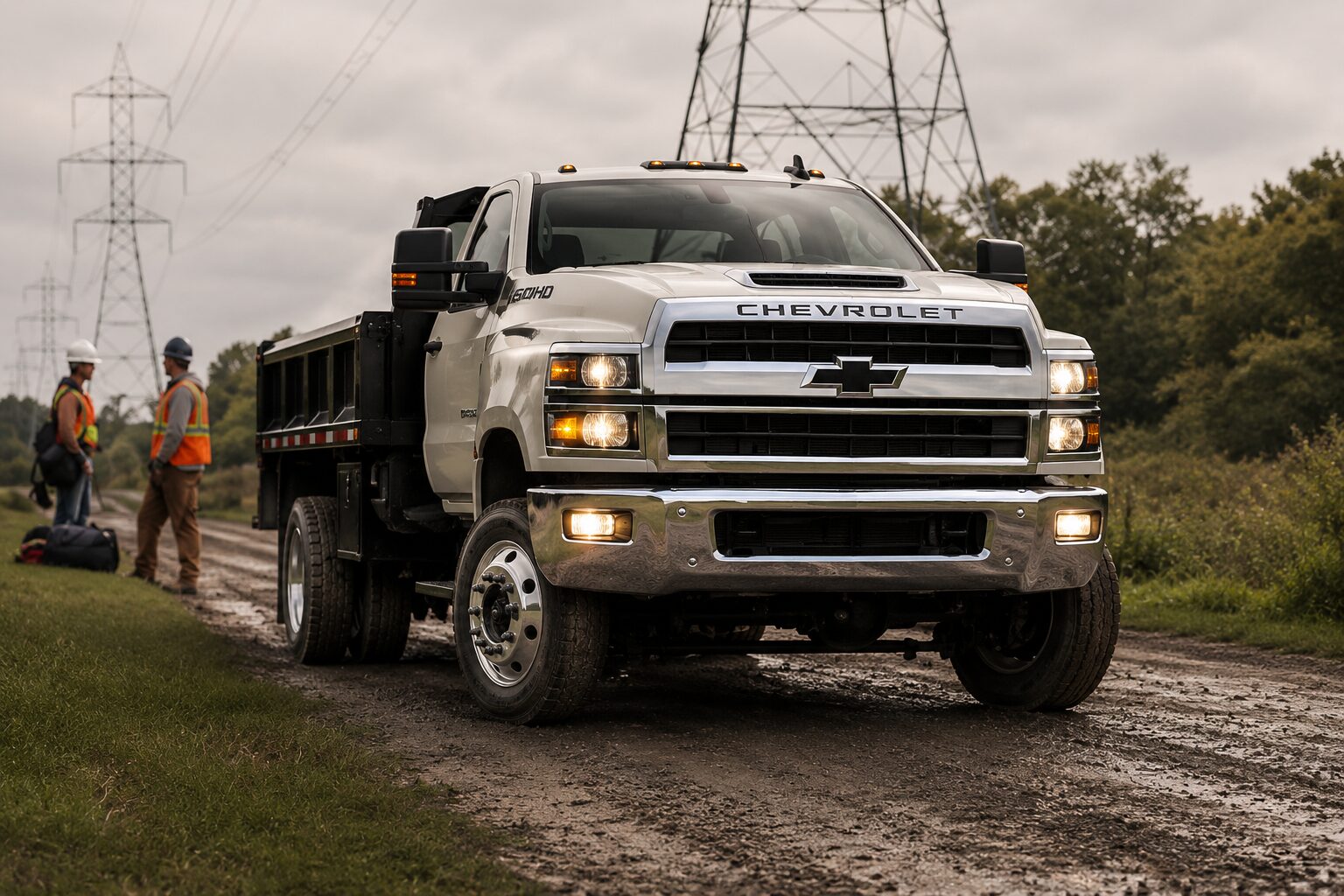
The announcement confirms what insiders had suspected for months: Chevrolet’s Silverado 4500HD, 5500HD, and 6500HD models will cease production this fall, following GM’s decision not to renew its manufacturing deal with International Trucks.
Production will end September 30 at the Springfield, Ohio, plant jointly operated with International Trucks. International’s own CV Series will exit the line even earlier, shutting down by September 10.
Once GM walked away from the partnership originally inked in 2015, the numbers no longer worked for either company. With GM’s order book gone, Springfield’s manufacturing lifeline vanished overnight.
Here's What They're Not Telling You About Your Retirement
The damage has already begun to ripple through the industry. The Springfield facility, once busy assembling commercial trucks under two brands, has been sold to Canadian defense contractor Roshel.
The sale effectively closes another chapter of American truck manufacturing, underscoring the growing vulnerability of legacy industrial operations in the face of globalized production shifts.
These weren’t just showpiece trucks or lifestyle pickups. The Silverado 4500HD, 5500HD, and 6500HD served construction firms, municipal fleets, and small businesses that depend on dependable diesel power for real work.
Each model used the 6.6-liter Duramax V8 paired with an Allison six-speed automatic—an unglamorous but battle-proven combination meant to last through endless job-site abuse.
This Could Be the Most Important Video Gun Owners Watch All Year
Despite the hardware, sales numbers never delivered. GM sold just 1,273 Silverado medium-duty trucks in the first quarter of 2026, a grim 37.4% decline year-over-year.
Ford, meanwhile, moved 2,331 of its competing F-650 and F-750 models over the same timeframe, leaving Chevrolet fighting for scraps in a declining segment.
For Ford, this is an opening to widen its dominance. For GM, the retreat signals that profitability now outweighs prestige in its commercial vehicle decisions. As one analyst put it, “When a product depends on third-party production, the margins have to be exceptional. These weren’t.”
The Springfield exit also highlights a deeper restructuring inside the industry. Manufacturing partnerships, once critical to scaling production, are now proving brittle as every automaker faces investor pressure to maximize efficiency.
Medium-duty trucks, selling at relatively low volume, can’t compete with profit margins from consumer trucks that double as luxury items.
The Silverado MD lineup’s departure exposes this divide. Pickup buyers today want leather interiors, touchscreen dashboards, and six-figure configurations designed for comfort, not concrete.
Meanwhile, the true “work trucks” are slipping closer to extinction. When GM abandons a lineup rooted in real utility, it says more about shifting priorities than about simple market failure.
GM is not leaving the commercial segment entirely, but its replacement strategy is clear. The company will rely more heavily on the Chevrolet Low Cab Forward trucks based on Isuzu’s N-Series and F-Series platforms.
These rebadged imports are cheaper to build and maintain, and they serve many of the same customers who once relied on heavier Silverado models.
That pivot reflects where GM believes the future of the market lies—in global partnerships, compact commercial fleets, and predictable margins instead of brute-force domestic production. It is a pragmatic shift, though one that quietly erodes the presence of American-built work trucks.
For International Trucks, losing GM’s business likely means hard restructuring ahead. The company plans to continue producing its MV Series, but without CV output at Springfield, workforce reductions appear inevitable.
The sale of the plant to Roshel is perhaps the clearest signal that the commercial truck pyramid has grown too steep for smaller players.
Beneath these moves lies a broader economic reality. Medium-duty demand depends on small businesses, local contractors, and regional logistics operators—sectors hit hardest by inflation, labor shortages, and high interest rates for vehicle financing.
When capital tightens, companies postpone fleet renewals. When that happens across thousands of customers, even modest-volume models become fiscal liabilities.
GM’s decision to bail out before losses deepened fits the financial discipline that corporate America now prizes. But it will leave a void for buyers who still want a traditional American-built medium-duty workhorse.
Ford may fill some of that gap, yet even its lineup is vulnerable if the economics worsen.
This cancellation hints at a slow, grinding retreat from industrial-scale manufacturing in favor of paper-thin partnerships and outsourced assembly. It’s efficient but hollow, producing balance sheet gains at the cost of domestic capability.
The irony, of course, is that Ford’s staying power now looks old-fashioned—and that’s exactly why it still resonates with loyal commercial buyers.
The Silverado MD story is more than a business footnote. It marks the passing of another American-built machine built for work, not marketing.
When those trucks vanish, they take with them not just Tonka-tough branding but the reliability backbone that small businesses once took for granted.
DISCLAIMER: GoldInvestors.news is not a registered investment, legal or tax advisor or broker/dealer. All investment/financial opinions expressed by GoldInvestors.news are from the personal research and experience of the owner of the site and are intended as educational material. Although best efforts are made to ensure that all information is accurate and up to date, occasionally unintended errors and misprints may occur.
Join the Discussion
COMMENTS POLICY: We have no tolerance for messages of violence, racism, vulgarity, obscenity or other such discourteous behavior. Thank you for contributing to a respectful and useful online dialogue.