DISCLAIMER: GoldInvestors.news is not a registered investment, legal or tax advisor or broker/dealer. All investment/financial opinions expressed by GoldInvestors.news are from the personal research and experience of the owner of the site and are intended as educational material. Although best efforts are made to ensure that all information is accurate and up to date, occasionally unintended errors and misprints may occur.
US stock futures opened Tuesday slightly higher but cautious, as Wall Street awaited Federal Reserve Chair Kevin Warsh’s first policy meeting and digested the market frenzy surrounding SpaceX’s record-breaking IPO.
Investors found themselves balancing optimism over a fresh US-Iran peace deal and reopening of the Strait of Hormuz with lingering fears about inflation and energy prices.
Dow Jones Industrial Average futures edged up 0.1% after Monday’s record close, while S&P 500 and Nasdaq 100 futures gained modestly.
The slight uptick came after markets rallied sharply on hopes that the US-Iran memorandum could ease tensions that rattled energy markets and sparked concerns about global supply disruptions.
Here's What They're Not Telling You About Your Retirement
Still, traders were wary that the initial enthusiasm may prove premature. The deal’s fine print has not been released, and experts warn that reopening the crucial Strait of Hormuz could take months.
While Washington promises commercial traffic will once again flow freely, investors are tempering expectations for a swift normalization of oil exports.
That hesitation comes as inflation readings have ticked up again. The conflict-related energy surge earlier this year pushed US wholesale inflation to its highest level since 2022, leaving policymakers with little room to relax.
Markets now look to Warsh’s debut Federal Open Market Committee meeting for clarity on how the central bank intends to respond.
This Could Be the Most Important Video Gun Owners Watch All Year
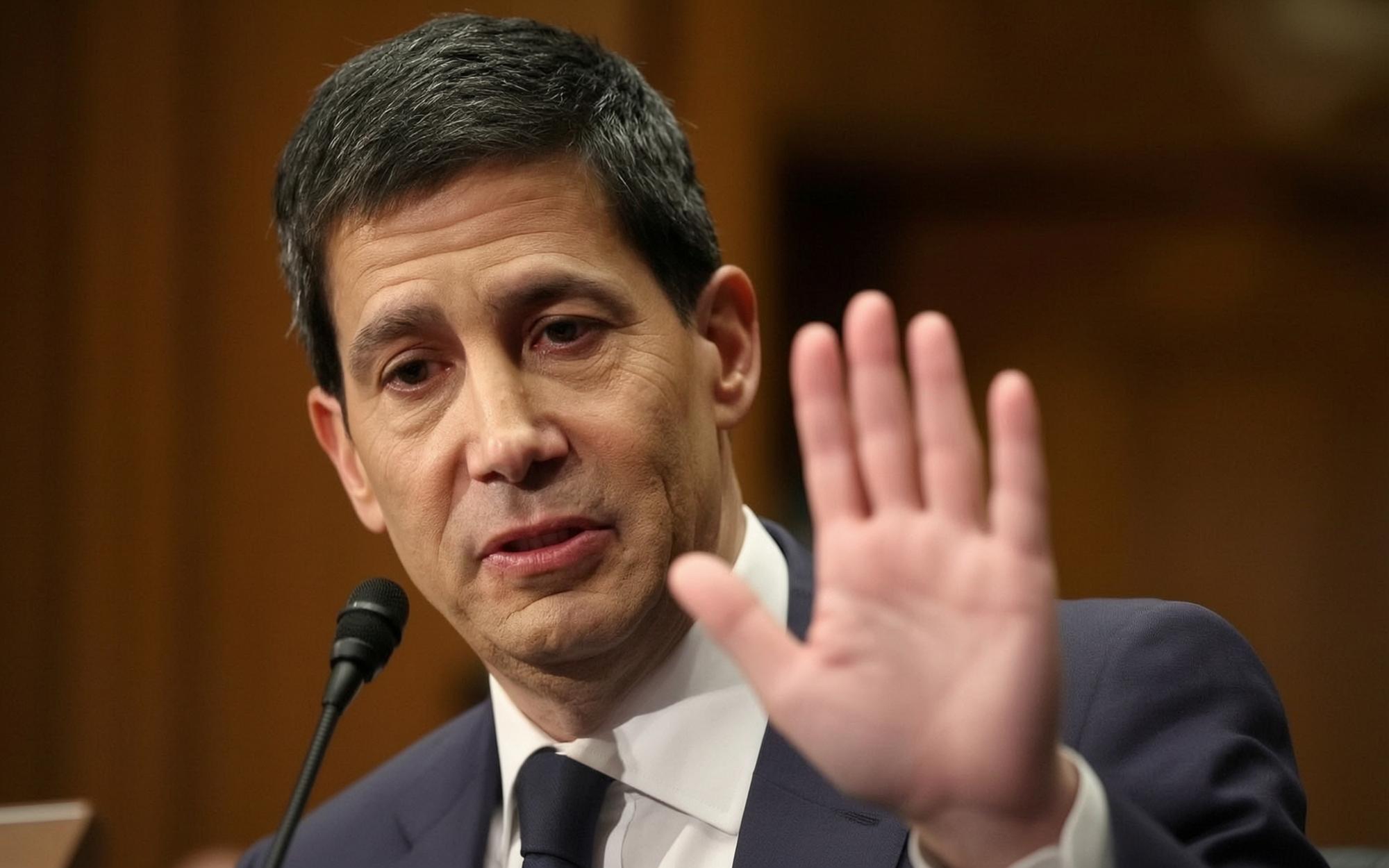
Warsh, backed by President Trump for the top post, inherits an uneasy economy—strong on paper but increasingly anxious beneath the surface. The Fed is widely expected to hold rates steady this week, though attention will center on the updated “dot plot” forecasting whether the bank leans toward tightening later this year.
Traders are split between those betting on continued accommodation and those who fear the Fed may have to resume hikes to contain persistent price pressures.
Complicating matters, central banks around the world are facing similar dilemmas. The Bank of Japan on Tuesday raised rates to 1%, its highest in 31 years, while citing lingering inflation risks from the global energy supply shock.
Japan’s move illustrates how synchronized, and uneasy, the fight against inflation has become. The European Central Bank and Bank of England will also issue decisions within the next two days, creating an unusually dense period of monetary policymaking.
Meanwhile, the corporate side of Wall Street is humming with major developments. Elon Musk’s SpaceX, trading under the ticker SPCX, extended its post-IPO rally with another premarket surge of more than 10%. The company’s market capitalization now flirts with $2.8 trillion, briefly overtaking Amazon.
Yet some analysts fear that retail investors—who bought a record $117.6 million of shares on the IPO’s first day—are chasing hype rather than fundamentals.
“We can say with certainty that this valuation makes absolutely no sense today,” said Ipek Ozkardeskaya, senior market analyst at Swissquote Bank.
“People are buying SpaceX in the expectation that others will buy too and push the price higher—that’s speculation.” Her comments capture a growing concern that speculative fervor could be overtaking reason as liquidity returns to risk assets.
At the same time, big corporations are repositioning in response to shifting trends.
Yum! Brands announced it will sell Pizza Hut to LongRange Capital and its China operations to Yum China for a combined $2.7 billion. The move is expected to bolster the company’s balance sheet and sharpen focus on its higher-growth Taco Bell and KFC divisions. Shares rose modestly on the news.
Robinhood also stirred premarket action, climbing 1.6% after revealing plans to lay off roughly 10% of its workforce. CEO Vlad Tenev framed the move as part of a broader strategy to “maximize talent density” and keep the company lean despite an expanding product suite.
Traders saw the decision as a discipline play rather than a distress signal.
Oil prices continued their retreat, with Brent crude dipping below $80 per barrel for the first time since March. US WTI crude traded just under $78, a steep drop from the $120 levels seen during peak hostilities with Iran earlier this year.
Markets are adjusting to the new geopolitical landscape but remain wary of renewed flare-ups that could again disrupt global shipping lanes.
For now, the dominant question is whether the market’s euphoria—driven by SpaceX’s surge and hopes for lasting Middle East peace—can coexist with the sober realities of high inflation and central bank caution. Investors have learned before that relief rallies can fade fast once policy tightening comes back into focus.
As Warsh steps into his first meeting, his tone on inflation, growth, and liquidity will be dissected word by word. Warsh’s past views suggest he favors long-term price stability and reduced Fed intervention in financial markets, positions that could mark a philosophical shift from the easy-money era of his predecessors.
Wall Street may be in celebration mode over new milestones, but beneath the excitement lies an uneasy truth: central banks cannot print stability.
With inflation running hot and valuations at euphoric heights, the era of effortless gains could soon give way to something far more deliberate.
For investors, Tuesday’s quiet futures session reflects more than just calm before a policy announcement.
It signals a market trying to decide whether the recent optimism is a real turning point—or just one more high before the next reckoning.
DISCLAIMER: GoldInvestors.news is not a registered investment, legal or tax advisor or broker/dealer. All investment/financial opinions expressed by GoldInvestors.news are from the personal research and experience of the owner of the site and are intended as educational material. Although best efforts are made to ensure that all information is accurate and up to date, occasionally unintended errors and misprints may occur.
Join the Discussion
COMMENTS POLICY: We have no tolerance for messages of violence, racism, vulgarity, obscenity or other such discourteous behavior. Thank you for contributing to a respectful and useful online dialogue.