DISCLAIMER: GoldInvestors.news is not a registered investment, legal or tax advisor or broker/dealer. All investment/financial opinions expressed by GoldInvestors.news are from the personal research and experience of the owner of the site and are intended as educational material. Although best efforts are made to ensure that all information is accurate and up to date, occasionally unintended errors and misprints may occur.
Taiwan Semiconductor Manufacturing Co. (TSMC) stunned markets this week with a sharp 67.9 percent year-over-year rise in June revenue, signaling another surge in demand for high-performance chips used in artificial intelligence and advanced computing.
The performance came just days before the company’s highly anticipated second-quarter earnings report, which analysts now expect will solidify TSMC’s position as the undisputed leader in the semiconductor manufacturing sector.
For the first half of 2026, TSMC reported revenue of 2.4 trillion New Taiwan dollars, or nearly $75 billion, marking a gain of over 35 percent compared to the same period last year.
The company’s momentum has already started to ripple across financial markets, with its shares climbing roughly 1 percent on Monday as investors absorbed the news.
Here's What They're Not Telling You About Your Retirement
What grabbed analysts’ attention wasn’t just the size of the growth, but the timing of it. Historically, TSMC’s June revenue tends to fall month-to-month due to seasonal patterns, yet this year’s report saw a 6.2 percent uptick from May.
Sravan Kundojjala of SemiAnalysis described the performance as “quite robust,” emphasizing that TSMC exceeded the high end of its second-quarter guidance, previously capped at $40.2 billion.
The company’s strength lies in dominating the global production of the world’s most advanced chips. Right now, that dominance intersects with soaring global interest in artificial intelligence technologies.
As AI systems become integral to everything from autonomous vehicles to massive data processing networks, TSMC’s fabrication capacity has become essential infrastructure for Silicon Valley and beyond.
This Could Be the Most Important Video Gun Owners Watch All Year
“The demand-supply situation in AI is still quite tight, and TSMC is sold out on N3, which is targeted by all leading AI GPU and CPU developers this year,” Kundojjala said.
The N3 node refers to the most sophisticated three-nanometer chip production process, which leading American companies such as Nvidia, Apple, and AMD are relying on heavily.
This alignment between U.S. tech giants and TSMC’s supply chain has fueled unprecedented growth in specialized chip revenue.
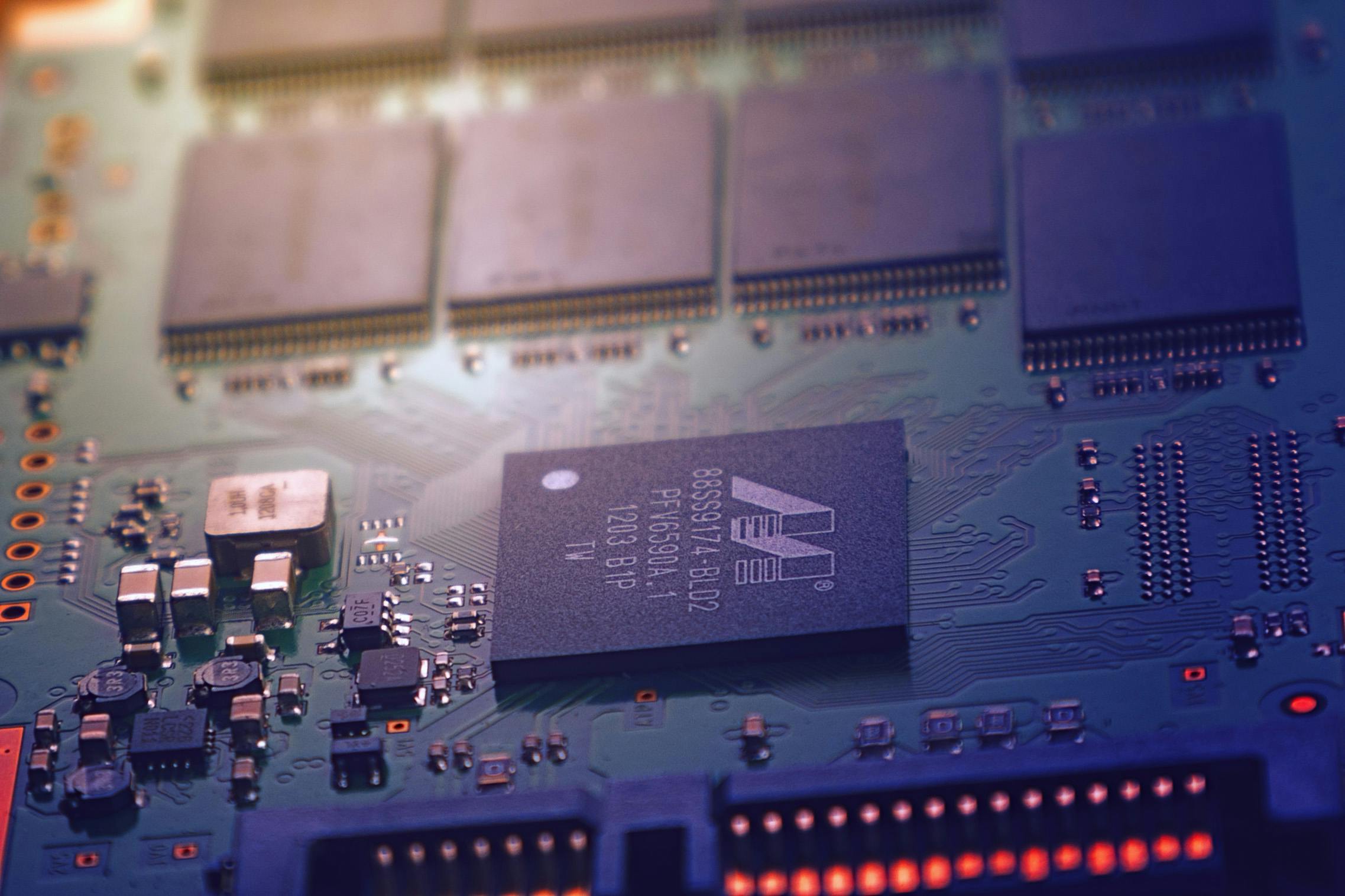
Analysts now project that TSMC could earn over $40 billion solely from AI-related chip production in 2026, which would account for about a quarter of its total revenue base. Few industries are expanding faster, and TSMC has been meticulous in its effort to stay ahead of the technological curve.
To meet swelling demand, the company is ramping up its manufacturing infrastructure across Taiwan.
According to Taiwan’s National Science and Technology Council Minister Wu Cheng-wen, TSMC is constructing two state-of-the-art chip packaging facilities in the Chiayi Science Park in southern Taiwan. The first of those plants is already in full-scale production, while the second is expected to go online soon.
The facilities will bolster TSMC’s advantages in advanced packaging technology—a key capability that enhances performance and efficiency by combining multiple chips into a single integrated system.
For AI applications that rely on heavy parallel processing, this technological edge is essential. In short, it is one more reason major clients have little choice but to depend on TSMC’s services.
Data from Counterpoint Research underscores just how far ahead the company is from any competitor. As of the first quarter of 2026, TSMC controlled roughly 73 percent of the global pure-play foundry market—a segment defined by chipmakers that manufacture semiconductors exclusively for external clients.
That degree of market power gives TSMC outsized influence on pricing, efficiency standards, and research priorities across the entire semiconductor chain.
Investors, analysts, and governments have all taken notice. The company’s global footprint now extends from Taiwan to its new operations in Japan and the ongoing multi-billion dollar expansion in the United States.
Washington policymakers are particularly keen on ensuring that America’s chip supply remains secure amid growing geopolitical competition in the Indo-Pacific.
Still, the company’s reliance on Taiwan as its strategic base remains both its greatest strength and its highest-risk factor.
Political tensions in the region could threaten supply stability, which is why TSMC has begun carefully diversifying production locations without diluting its core engineering talent pool.
As the industry readies for TSMC’s quarterly earnings release on July 16, anticipation is running high. Analysts expect strong second-quarter results will reinforce not only TSMC’s dominance but also the reality that AI hardware demand is reshaping the global technology hierarchy.
Much of the broader tech sector depends on what happens next. Nvidia, Apple, and AMD’s product calendars are intertwined with TSMC’s production cycles, meaning any delays or capacity constraints could ripple across entire markets.
But for now, the numbers show robust health and rising operational efficiency in a business environment where winners are few and technology margins razor-thin.
The semiconductor supply chain is notoriously cyclical, yet TSMC’s latest results show that the AI revolution may have changed that dynamic. Demand is being driven by structural transformation, not temporary hype.
Investors watching the company’s next move will have little doubt that the world’s most valuable chipmaker remains in command of the field.
DISCLAIMER: GoldInvestors.news is not a registered investment, legal or tax advisor or broker/dealer. All investment/financial opinions expressed by GoldInvestors.news are from the personal research and experience of the owner of the site and are intended as educational material. Although best efforts are made to ensure that all information is accurate and up to date, occasionally unintended errors and misprints may occur.
Join the Discussion
COMMENTS POLICY: We have no tolerance for messages of violence, racism, vulgarity, obscenity or other such discourteous behavior. Thank you for contributing to a respectful and useful online dialogue.