DISCLAIMER: GoldInvestors.news is not a registered investment, legal or tax advisor or broker/dealer. All investment/financial opinions expressed by GoldInvestors.news are from the personal research and experience of the owner of the site and are intended as educational material. Although best efforts are made to ensure that all information is accurate and up to date, occasionally unintended errors and misprints may occur.
The European Union has formally joined the American sanctions drive against Iran, giving Washington fresh momentum as it seeks to isolate Tehran from global finance.
Meanwhile, South Korea is considering military assistance aimed at reopening the Strait of Hormuz, although Seoul insists no final decision has been reached.
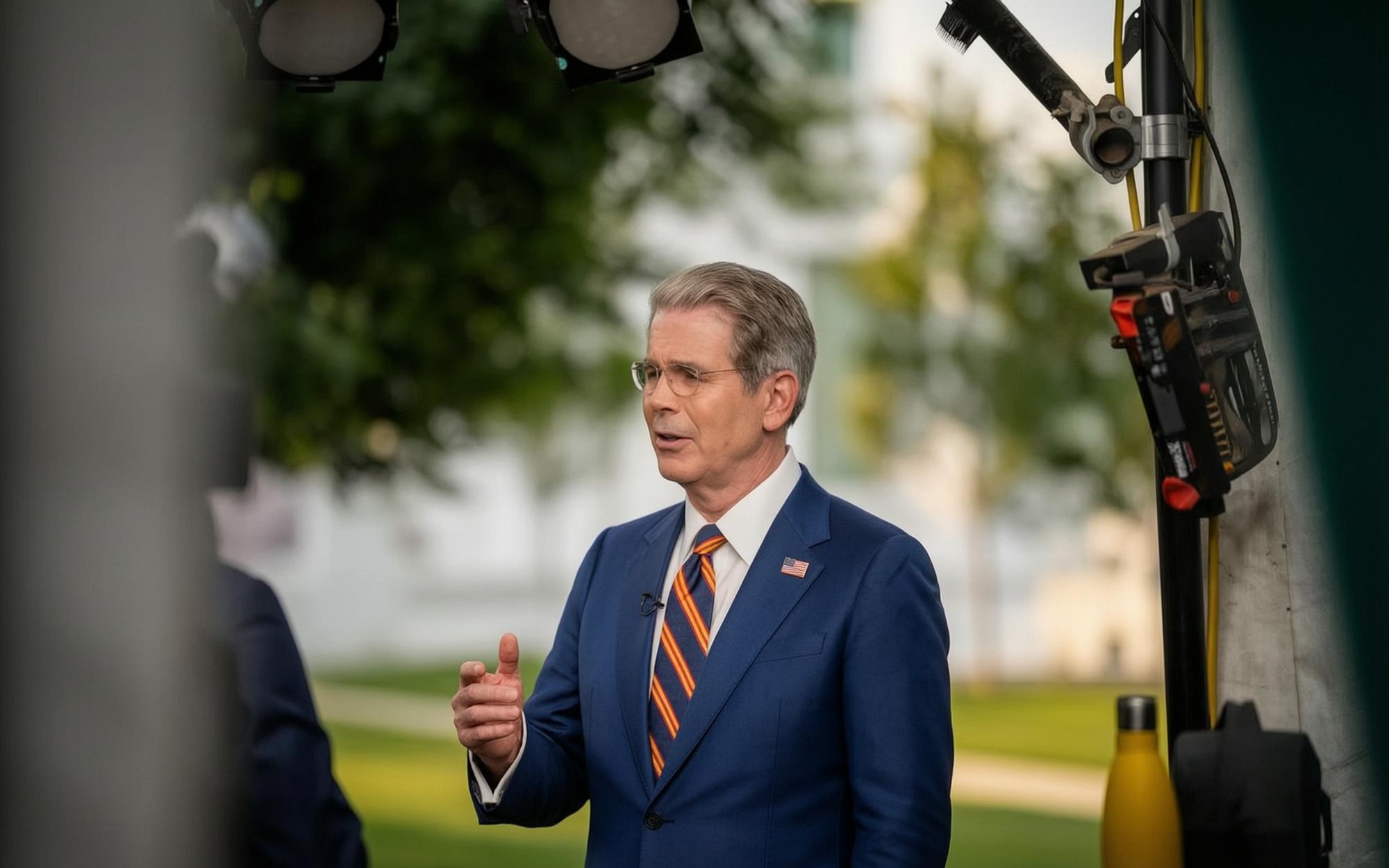
Treasury Secretary Scott Bessent welcomed the European commitment to “Operation Economic Outcast,” the campaign designed to sever Iran from financial markets and vital sources of foreign revenue.
We appreciate their strong and early stance,” Bessent wrote Thursday evening on social media.
Here's What They're Not Telling You About Your Retirement
“The world is sending a clear message to the Iranian regime: We will not stop until every remaining financial lifeline has been severed,” Bessent added.
The statement reflected Washington’s effort to turn military pressure into a broader financial siege involving major allies and economic institutions.
Brussels announced its support on Aug. 31, saying it favored measures intended to stop Tehran’s “destabilizing activities” and revive peace negotiations.
The bloc specifically endorsed Operation Economic Outcast as another means of placing economic pressure on the Islamic regime.
This Could Be the Most Important Video Gun Owners Watch All Year
The European decision arrived as finance ministers and central bank governors from the Group of 20 gathered in Asheville, North Carolina.
That setting gave the Trump administration an opportunity to push other governments toward a harder position against institutions that continue conducting business with Iran.
“The United States stands firm with our allies in ensuring the murderous Iranian regime cannot exploit the global financial system to fund its nuclear ambitions, weapons programs, and terror proxies,” Bessent said.
Washington launched the campaign in late August with measures targeting digital assets, advanced technology purchases, gold reserves, aviation, shipping, and other financial channels.
Iran sharply rejected the European endorsement, portraying it as submission to American power rather than independent policy.
Foreign Ministry spokesperson Esmail Baghaei called the campaign Washington’s “economic terrorism” and accused Europe of abandoning its claimed principles.
Baghaei wrote on Sept. 1 that the bloc had “surrendered its sovereignty, its laws and regulations, values and ethics to U.S. coercion.”
The response revealed Tehran’s concern that coordinated Western restrictions could prove more damaging than scattered sanctions imposed without broad international support.
Bessent described the effort as an “economic onslaught” against Iran’s worldwide financial connections.
He also warned that governments helping Tehran should “expect to share in the isolation of a withering regime,” raising the threat of punishment for banks and trading partners beyond Iran itself.
China remains especially important because it was Iran’s largest trading partner and purchased roughly 90 percent of its sanctioned crude exports before the war.
MORE NEWS: U.S. Payrolls Surge by 162,000 in August, Crushing Forecasts as Unemployment Holds at 4.1%
Any serious enforcement campaign will therefore be measured by whether Washington can disrupt those transactions without triggering a larger confrontation with Beijing.
The European Union already maintains separate sanctions targeting Iran’s nuclear activities, ballistic missile programs, and military support for Russia.
Its decision to join the American campaign expands that pressure while signaling that Tehran could face increasingly limited access to capital, shipping services, technology, and hard assets.
Before the summit, Bessent indicated that Group of 20 governments would be pressed to cut financial connections with Iran or risk secondary sanctions.
He also signaled that Washington could announce additional secondary sanctions each week, beginning with banks that process Iranian transactions and potentially excluding them from the dollar financial system.
South Korea is simultaneously considering options that may include military support for the American effort to reopen the Strait of Hormuz, according to Reuters.
Seoul nevertheless rejected reports that deployment had already been approved, stating that “details related to the issue have yet to be decided.”
Several South Korean news organizations reported that troops could be sent to the Gulf before the end of the year, with parliamentary approval possibly sought this month.
The deliberations follow signs of American frustration over Seoul’s reluctance to assist militarily, including reduced joint exercises and the cancellation of a September landing drill.
Regional hostilities have intensified again after American forces struck Iranian military targets in response to attacks on ships and United States personnel.
Iran answered by launching missiles at American military bases across the Middle East, renewing fears that a contained conflict could widen rapidly.
The Strait of Hormuz remains the central economic pressure point because it carried about one fifth of global oil flows before the war.
Shipping remains subdued as Iran periodically attacks vessels near the Omani coast, creating persistent risks for energy prices, insurance costs, and global supply chains.
The United States has maintained a naval blockade intended to prevent vessels from entering or leaving Iranian ports and to disrupt Tehran’s crude exports.
U.S. Central Command said Friday that forces had redirected 87 commercial vessels, disabled three, and boarded two as Washington demands full compliance with the blockade.
For investors, the expanding campaign links military danger directly with oil, gold, digital assets, shipping, currencies, and broader market volatility.
Europe’s participation strengthens the financial squeeze, while South Korea’s pending decision could determine whether allied support now moves beyond sanctions and into direct security operations.
DISCLAIMER: GoldInvestors.news is not a registered investment, legal or tax advisor or broker/dealer. All investment/financial opinions expressed by GoldInvestors.news are from the personal research and experience of the owner of the site and are intended as educational material. Although best efforts are made to ensure that all information is accurate and up to date, occasionally unintended errors and misprints may occur.
Join the Discussion
COMMENTS POLICY: We have no tolerance for messages of violence, racism, vulgarity, obscenity or other such discourteous behavior. Thank you for contributing to a respectful and useful online dialogue.