WHAT YOU NEED TO KNOW
- Trump and Xi discussed AI during a historic state dinner attended by leaders from Nvidia, SpaceX, AMD, Apple, OpenAI, Google and Microsoft.
- China’s readout called for continued dialogue, human control of AI and cooperation to prevent misuse and abuse.
- Export controls, advanced Nvidia chips, remote access through overseas data centers and “distillation” remained potential sources of friction.
- AMD shares surged 10% to a record high, taking the company above a $1 trillion market capitalization.
DISCLAIMER: GoldInvestors.news is not a registered investment, legal or tax advisor or broker/dealer. All investment/financial opinions expressed by GoldInvestors.news are from the personal research and experience of the owner of the site and are intended as educational material. Although best efforts are made to ensure that all information is accurate and up to date, occasionally unintended errors and misprints may occur.
U.S. President Donald Trump hosted Chinese President Xi Jinping at a historic state dinner on Thursday, bringing the two leaders together with some of the most influential names in artificial intelligence. The menu featured fricassée, sea bass and crémeux, while AI appeared prominently in the surrounding diplomatic conversation.
Nvidia CEO Jensen Huang attended with his wife, Lori Huang, alongside SpaceX CEO Elon Musk, AMD CEO Lisa Su and Apple CEO Tim Cook. OpenAI CEO Sam Altman and president Greg Brockman, Google cofounder Sergey Brin and Microsoft boss Satya Nadella were also on the guest list.
Their presence reflected the growing geopolitical importance of AI as warnings about its existential risks have intensified in recent weeks. The technology has moved to the forefront of discussions between Washington and Beijing, even as the two countries remain divided over access to advanced chips.
Before meeting Xi, Trump used the term Super Intelligence, or SI, instead of AI in a Truth Social post: “Super Intelligence (SI) will be a big topic of discussion, but I want to leave it exactly where it is. That is China’s position also.”
A Chinese account of the meeting said Xi argued that China and the U.S. may compete in AI but could cooperate even more. The readout portrayed continued communication as a way for both governments to address the technology’s benefits, risks and possible misuse.
The readout quoted Xi: “The two sides can continue their dialogue on AI, exchange views on its risks and benefits, and jointly prevent the misuse and abuse of AI. AI must be kept under human control.”
Xi added, “A people-centered approach should be upheld, and AI should be developed for the positive and for good, so that AI will serve the progress of humanity.”
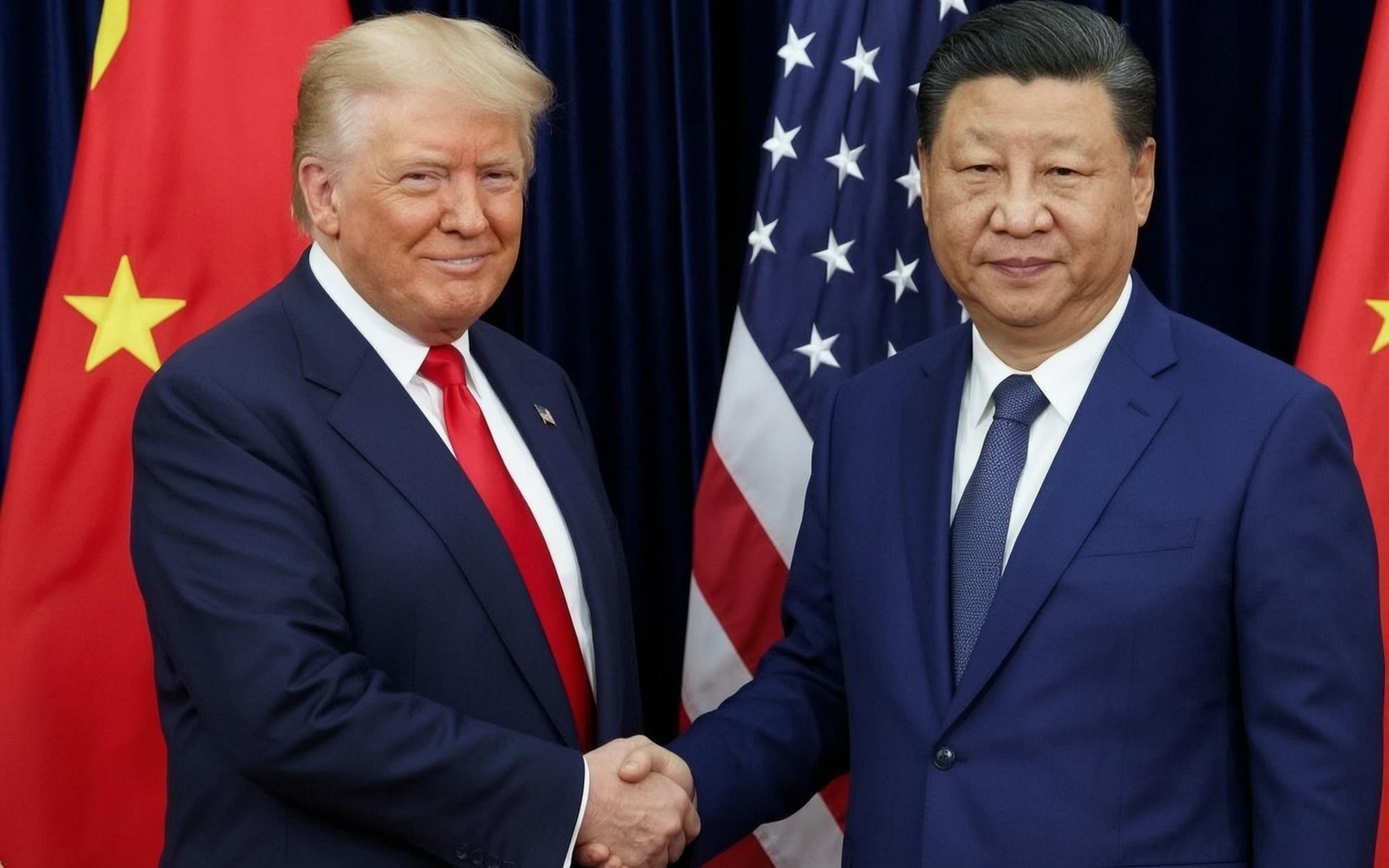
According to the Chinese account, Trump said both sides should “maintain dialogue and strengthen cooperation on AI.” The U.S. government had not published its own summit readout when the original report went live, leaving the Chinese statement as the main official description available.
The cooperative language followed a weekend discussion between U.S. Treasury Secretary Scott Bessent and his Chinese counterpart, He Lifeng. They discussed a dialogue between the U.S. and China on AI, including a channel for incidents reaching “up to a national security level.”
That proposed channel has been compared with the Cold War era “red phone,” which provided direct communication between the U.S. and Russia to prevent a nuclear crisis from escalating. Specific details about how an AI channel would operate remained limited.
Both governments had already rejected the idea of guardrails or a slowdown in developing AI. Altman and Anthropic CEO Dario Amodei had called for such measures, alongside a number of researchers at their companies.
Aalok Mehta, director of the Wadhwani AI Center at the Center for Strategic and International Studies, said the immediate result appeared narrow. “It appears we ended up with an intent to continue dialogue, along with a hotline of some sort for emergencies,” Mehta told CNBC.
Potential friction remained around U.S. export controls restricting China’s ability to import advanced Nvidia chips. Recent chip releases and AI models from Chinese technology giants have strengthened Beijing’s argument that Washington’s restrictions have limits, according to the report.
Other possible flashpoints included reported remote access by Chinese companies to Nvidia chips through overseas data centers. American allegations involving “distillation” also could have contributed to a tense discussion, although it remained unclear whether either issue produced progress or specific commitments.
Mehta said continued talks could eventually yield more substantial agreements. “The hotline itself could become a robust tool when paired with a proper incident reporting system. But that will take real commitment to making it work and high-level engagement from both sides.”
The talks unfolded as AI companies continued pushing ahead. Anthropic and OpenAI announced new, less costly models, AMD shares surged 10% to a record high and a market capitalization above $1 trillion, and Qualcomm unveiled Android phone chipsets designed for AI processing on devices.
DISCLAIMER: GoldInvestors.news is not a registered investment, legal or tax advisor or broker/dealer. All investment/financial opinions expressed by GoldInvestors.news are from the personal research and experience of the owner of the site and are intended as educational material. Although best efforts are made to ensure that all information is accurate and up to date, occasionally unintended errors and misprints may occur.
Join the Discussion
COMMENTS POLICY: We have no tolerance for messages of violence, racism, vulgarity, obscenity or other such discourteous behavior. Thank you for contributing to a respectful and useful online dialogue.